Iraq
February 22, 2024 — Scott Johnson
Before Bob Dylan really made his name in folk music he recorded “Mixed-Up Confusion” — a rock song that was his first single and that anticipated the direction he would go a few years later. Dylan recorded it in the sessions for Freewheelin‘, but Columbia held the original back from his albums until Dylan included it on Biograph in 1985. The song comes to mind in connection with the video
»
March 19, 2023 — John Hinderaker

We last saw Sarah Idan when she was Miss Iraq in the 2017 Miss Universe pageant. She made international news when Miss Israel posted a photo of the two of them on Instagram, with kind words about Ms. Idan. That caused predictable blowback in the Arab world, causing Idan to issue an apology in Arabic. It wasn’t enough; her Iraqi citizenship was revoked and her family fled to another country.
»
October 22, 2021 — Paul Mirengoff
Colin Powell’s death from the Wuhan coronavirus evoked dueling liberal mainstream media thoughts. On the hand, Powell rose to heights never before reached by an African-American military leader/statesman. This made him an American hero in the thinking of the liberal MSM. On the other hand, Powell publicly advocated war against Iraq in 2003, most notably in a speech at the UN, and cited intelligence that proved to be faulty as
»
October 18, 2021 — Paul Mirengoff
Earlier this month, Iraq held elections. Fifteen years ago, Iraqi elections were considered a big deal in the U.S. Nowadays, hardly anyone here pays attention to them. That’s understandable. Saddam Hussein, al Qaeda in Iraq, and ISIS are all long gone. But Iran isn’t. Neither are those strong Iranian-backed militias. And the U.S. still has a small contingent of troops there. Thus, it’s worth taking a moment to consider the
»
January 12, 2020 — Scott Johnson
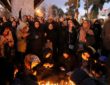
After days of lying about the increasingly obvious, the Iranian regime admitted that it shot down the Ukrainian jetliner early this past Wednesday as it departed from Tehran. The current AP story on Iran’s admission includes mention of the ensuing protests that roiled the country last night: In the face of mounting evidence, Iran on Saturday acknowledged that it shot down the Ukrainian jetliner by accident, killing all 176 people
»
January 5, 2020 — Paul Mirengoff

Take that, President Trump. Iraq’s parliament passed a nonbinding resolution calling on the government to end the presence of foreign troop presence in Iraq. Not only is the resolution non-binding, but the caretaker prime minister isn’t legally authorized to sign the bill into law. Not only that, there apparently is no timetable attached to the resolution. Not only that, the Iraqi parliament that passed the resolution was barely able to
»
January 3, 2020 — Scott Johnson
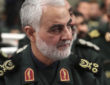
Let’s see if you can sort the sane from the “other” in the following hot takes on the termination with extreme prejudice of Iran’s terrorist commander Qassem Soleimani at the order of President Trump yesterday. Rich Lowry comments: This is an incredibly bold move that shows that Trump’s red line against harming Americans was very real. The conventional wisdom that Trump is just a Twitter tiger, which was driving news
»
January 2, 2020 — Paul Mirengoff
Fox News reports that Iranian Gen. Qassim Soleimani has been killed in a rocket attack at Baghdad International Airport. Soleimani was the head of the Islamic Revolutionary Guard Corps’ elite Quds Force. President Trump ordered the attack and our military carried it out. Secretary of State Mike Pompeo had said that Soleimani is as dangerous as the late ISIS leader, Abu Bakr al-Baghdadi, who was killed by a U.S. strike
»
January 1, 2020 — Paul Mirengoff
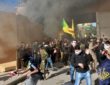
This front page Washington Post story about the siege by pro-Iran militias of the U.S. embassy in Baghdad, now ended, is an attempt to score points against President Trump. The subtitle of the story (paper edition) is “Trump warns Iran but shows little appetite for deeper involvement.” Trump responded to the siege by deploying troops to the region. A president with an “appetite” for a “deeper involvement” than that would
»
January 1, 2020 — John Hinderaker
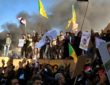
The pro-Iranian Kataeb Hezbollah militia, which broke through one of the outer gates of the American embassy in Baghdad yesterday, has now withdrawn across the Tigris River. It isn’t clear whether the retreat was prompted by the U.S. show of force that involved sending Marines and Apache helicopters to the site, or whether there was some other motive. The militia leaders are claiming a moral victory. No doubt the Trump
»
December 31, 2019 — John Hinderaker
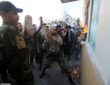
As Paul noted a little while ago, pro-Iran militia forces known as Kataeb Hezbollah have besieged the U.S. Embassy in Baghdad. They are being referred to in news accounts a “protesters,” but in fact they are a trained and organized military force. The attackers breached the outer wall of the embassy compound and then milled around, set fires, etc. Apparently many liberals are trying to portray this attack as Trump’s
»
December 31, 2019 — Paul Mirengoff
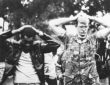
With developments going from bad to worse for the Iranian regime, the mullahs have decided to play a 40 year-old card. They have orchestrated an attack on a U.S. embassy, this time the one in Baghdad. President Trump summarized the situation in this tweet: Iran killed an American contractor, wounding many. We strongly responded, and always will. Now Iran is orchestrating an attack on the U.S. Embassy in Iraq. They
»
November 8, 2019 — Paul Mirengoff

I have tried to provide some coverage of the mass anti-Iran protests in Iraq and the anti-Hezbollah protests in Lebanon. Taken together, they can plausibly be viewed as a “revolt against Iran.” Caroline Glick argues that the mass protests are the product of President Trump’s tough economic sanctions against Iran. She writes: The sanctions are one of the causes of the protests in both Lebanon and Iraq. Due to the
»
November 6, 2019 — Paul Mirengoff
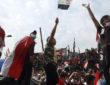
I’ve tried to keep our readers apprised, or at least aware, of the large scale protests in Lebanon and Iraq. Both sets of protests are bad news for Iran. In Lebanon, the protests are directed, in part, against Hezbollah, Iran’s proxy. In Iraq, the major target appears to be Iran itself. Eliora Katz, writing for Tablet, calls the protests “the revolt against Iran”: Across the Middle East, from Baghdad to
»
October 31, 2019 — Paul Mirengoff
I wrote here about protests in Lebanon against a government dominated by Hezbollah, and therefore by Iran. Hezbollah’s leader initially expressed support for the protesters, pretending that the target was other players in Lebanon. When protesters refuted that myth, he changed his tune and warned of civil war. Since then, Hezbollah has violently attacked protesters. Iraq is experiencing a similar dynamic. Large-scale protests have broken out again. As in Lebanon,
»
October 24, 2019 — Paul Mirengoff
Yesterday, President Trump spoke about the cease-fire in northeastern Syria. He declared it a major diplomatic victory for the administration. Trump noted that critics had “scorned” him for removing U.S. troops from areas controlled by the U.S. and our Kurdish allies. “Now,” claimed Trump, “people are saying ‘Wow, what a great outcome — congratulations.'” Most of Trump’s critics aren’t saying this, though. They complain that Trump has opened the door
»
September 5, 2019 — Paul Mirengoff
In 2002, Joe Biden voted to authorize going to war with Iraq. A decade earlier, he had voted against doing so. The war Biden opposed liberated Kuwait with very little loss of American life. The war Biden supported proved far more problematic. Now Biden claims that “immediately, th[e] moment [the second Iraq war] started, I came out against the war at that moment.” This claim isn’t true, as we’ll see
»
