Middle East
April 21, 2022 — Steven Hayward

I’m slowly working up to a long piece about the parallels between the hapless Jimmy Carter Administration and the Biden Clown Show that go beyond inflation, energy market disruptions, foreign policy cluelessness, and other totems of the dismal 1970s. Carter, we tend to forget today, was the Democratic establishment’s necessary and acceptable choice to outflank George Wallace, who had a real shot of winning the Democratic nomination in 1976. In 2020,
»
May 20, 2021 — Paul Mirengoff
The Washington Times reports that Israel has announced a cease fire in its battle against Hamas: Israel on Thursday announced a cease-fire in the bruising 11-day war against Hamas militants that caused widespread destruction in the Gaza Strip and brought life in much of Israel to a standstill. Prime Minister Benjamin Netanyahu’s office announced the cease-fire after a late-night meeting of his Security Cabinet. It said the group had unanimously
»
May 16, 2021 — Paul Mirengoff

Trump haters at the Washington Post, the New York Times, and elsewhere portray the latest conflagration in Israel as evidence that former president Trump’s Middle East deals — the Abraham Accords — weren’t worth celebrating, after all. In my view, this line misapprehends what the Accords were about. Trump may have overstated what the Accords meant. Like many a politician, and to a greater degree than most, he oversold nearly
»
May 15, 2021 — Paul Mirengoff

This week, the Arabic-language social media sites of two English Premier League football teams voiced support for Hamas in its latest confrontation with Israel. The two clubs are Wolverhampton Wanderers (Wolves) and West Ham United. The Wolves’ tweet stated, in Arabic: You don’t need to be Palestinian to speak, you just need to be human. Our hearts and prayers are behind Palestinians. God save the people of Jerusalem & Palestine.
»
April 12, 2021 — Steven Hayward

When we look out on the world scene and how the Biden Administration is positioning itself, everyone should keep in mind the summary statement of former Defense Secretary and CIA director Robert Gates (no one’s idea of a partisan firebrand, as he’s been serving presidents of both parties since the Carter Administration): Joe Biden, Gates said, “has been wrong on nearly every major foreign policy and national security issue over the
»
September 8, 2020 — Paul Mirengoff
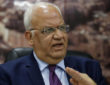
The Clarion Project reports that Harvard University has selected Saeb Erekat — who serves as secretary general of the Executive Committee of the Palestine Liberation Organization (PLO) — to be a fellow at the Kennedy School’s Belfer Center for Science and International Affairs. Erekat’s duties will include mentoring students and giving seminars in the school’s “The Future of Diplomacy Project.” Erekat is rabidly anti-Israel, as one would expect from a
»
August 16, 2020 — Steven Hayward

This week’s Power Line Three Whisky Happy Hour finds Charles Lipson bellying up to the bar for a flight of whiskys that begins with a tale of his mis-spent youth discovering the “bootleggers and Baptists” hypothesis in the course of violating numerous federal and state laws, as well as his legendary Henry Kissinger impression. We take up three topics to go with three shots of whisky: the rapid transition from
»
August 14, 2020 — Paul Mirengoff

In a deal brokered by the Trump administration, Israel and the United Arab Emirates have agreed to normalize relations. In exchange for normalized relations, Israel agreed to suspend its West Bank annexation plans. The two sentences above point to an obvious problem with the deal. Normalized relations between two states are normal, and usually benefit both states. Why should one — and only one — of the two states have
»
August 13, 2020 — John Hinderaker
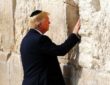
Today the United States, Israel and the United Arab Emirates jointly announced an agreement whereby Israel and the UAE have fully normalized their relationship. President Trump tweeted: Joint Statement of the United States, the State of Israel, and the United Arab Emirates pic.twitter.com/oVyjLxf0jd — Donald J. Trump (@realDonaldTrump) August 13, 2020 The communique paints an optimistic picture: Delegations from Israel and the United Arab Emirates will meet in the coming
»
August 9, 2020 — Scott Johnson

The best analysis I have found so far on the August 4 explosions in the port of Beirut is set forth in David Wurmser’s August 7 column “Lebanon: What happened?” Also useful is this backgrounder disseminated by the Shurat HaDin/Israel Law Center. I thought readers might find it of interest. With Shurat HaDin’s kind permission, I am posting it below: As the Lebanese people struggle to recover from the catastrophic
»
August 5, 2020 — Scott Johnson
If you’re wondering about the explosion that rocked Beirut yesterday, you may want to check out the Times of Israel staff report “Mystery swirls around what caused ammonium nitrate to explode in Beirut.” The Times of Israel report is the best I have seen so far. The Times of Israel site has more in the Gambrell/Federman AP story “Expert says ‘cheap pyrotechnics’ likely lit up ammonium nitrate in Beirut.” The
»
January 4, 2020 — Paul Mirengoff

Thomas Friedman calls the late Gen. Soleimani “Iran’s most overrated warrior.” He also calls Soleimani “possibly the dumbest man in Iran.” Friedman explains: In 2015, the United States and the major European powers agreed to lift virtually all their sanctions on Iran, many dating back to 1979, in return for Iran halting its nuclear weapons program for a mere 15 years, but still maintaining the right to have a peaceful
»
September 20, 2019 — Paul Mirengoff
It has become a standard talking point among leftists and Democrats to blame President Trump for Iran’s attack on Saudi Arabian oil facilities. This Washington Post column by David Ignatius provides a good example of the genre. In his opening sentence, Igantius claims that Trump “start[ed] the fight” with Iran. We shouldn’t be surprised by this line of argument. As Jeane Kirkpatrick observed decades ago, the left always blames America
»
September 16, 2019 — Steven Hayward
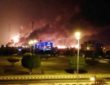
Assuming Iran is indeed behind the attack on Saudi Arabia’s major oil refining facility, it represents a step-increase in Iranian-backed aggression in the region. The Wall Street Journal‘s Spencer Jakab says this attack is “the big one“: Saturday’s attack on a critical Saudi oil facility will almost certainly rock the world energy market in the short term, but it also carries disturbing long-term implications. Ever since the dual 1970s oil
»
August 30, 2019 — Paul Mirengoff
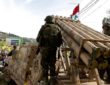
Hezbollah has stated that it intends to produce missiles capable of striking Israel with pinpoint accuracy. Iran is assisting Hezbollah in this enterprise. It is helping Hezbollah construct and develop facilities at which precision missiles are manufactured. Israel has responded by attacking targets in Syria, Lebanon, and Iraq. Attacks in the latter two countries are a recent development, prompted by stepped up Iranian efforts to assist Hezbollah’s missile development. The
»
June 19, 2019 — Paul Mirengoff

Yesterday, I discussed a column by Bret Stephens about how the U.S. should respond if Iran continues to attack ships in the Persian Gulf. Stephens recalled that in 1988, after a U.S. frigate was badly damaged when it hit an Iranian naval mine, we destroyed half the Iranian fleet in a matter of hours. I noted that today Iran is much more capable than in 1988 of inflicting damage on
»
February 22, 2019 — Scott Johnson

In the current Mosaic podcast (introduced here), the Hudson Institute’s Michael Doran supports the withdrawal of American troops from their stations in Syria. In his January essay for Mosaic, Doran defended the White House’s strategy in Syria based on a prudent assessment of geopolitical realities. Weighing the pros and cons, Doran forcefully makes the case that, if the United States is to succeed in advancing its interests and elevating its
»
