Middle East
January 10, 2019 — Paul Mirengoff

Secretary of State Mike Pompeo is in the Middle East trying to assure friends, allies, and non-adversaries that the U.S. isn’t walking away from the region. He claimed that progress has been made in addressing Turkey’s objections to Kurdish militants in northeastern Syria and that Turkey has provided “commitments” that Kurds who fought with U.S. forces against ISIS will be protected when the U.S. leaves Syria. The only public commitment
»
December 14, 2018 — Paul Mirengoff
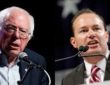
Sen. Mike Lee used to be something of a conservative hero. More recently, he’s become heavy into working with Democrats. Not just any Democrats, but some of the most liberal, most stridently partisan Senate Dems. He and Sen. Dick Durbin combined to sponsor the jailbreak legislation that may well be on the verge of passing the Senate. A few years ago Lee and Durbin collaborated on a jailbreak bill that
»
December 6, 2018 — Paul Mirengoff
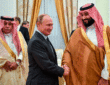
The Washington Post takes time out from urging that the U.S. blow up relations with Saudi Arabia, as retribution for the killing of Jamal Khashoggi, to provide a clear-eyed assessment of reality in the Middle East. The Post’s Liz Sly finds that Russia has become the region’s rising power. Russia has made huge inroads, commercial and diplomatic, throughout the Middle East. The nations that now woo Putin run the gamut
»
November 20, 2018 — Paul Mirengoff
President Trump today announced that, notwithstanding the murder of Jamal Khashoggi, “the United States intends to remain a steadfast partner of Saudi Arabia to ensure the interests of our country, Israel and all other partners in the region.” The essence of Trump’s explanation for the decision is contained in the first sentence: “The world is a dangerous place!” Elaborating on this obvious but oft-neglected truth, Trump cited our interest in
»
October 22, 2018 — Paul Mirengoff
On Sunday, the Washington Post (paper edition) published a lengthy tribute to Jamal Khashoggi, its former columnist. The article is worth reading. Joby Warrick, Loveday Morris, and Souad Mekhennet present a more nuanced and informative account of Khashoggi than the Post has been willing to render until now. I think the Post has recognized that its portrait of Khashoggi as a pro-democracy saint needs to be modified slightly now that
»
October 20, 2018 — Scott Johnson
The Kingdom of Saudi Arabia is apparently unschooled in the arts of scandal management. Having now conceded for the first time that Jamal Khashoggi died in the kingdom’s consulate in Istanbul earlier this month, the kingdom claims that claiming that Khashoggi’s death came after an argument and a “fistfight” with men in the facility. According to Politico’s story, the kingdom has arrested 18 Saudi nationals suspected of involvement in Khashoggi’s
»
October 19, 2018 — Paul Mirengoff
To figure how not to think about events in the Middle East, it’s often useful to consult Tom Friedman. Yesterday, Friedman appeared on PBS with Christiane Amanpour to discuss the murder of Jamal Khashoggi. Friedman looks like a fool in the wake of the murder because last year he wrote a gushing column praising Mohammed bin Salman (MBS), Saudi Arabia’s powerful crown prince, for implementing a “top-down Arab spring.” Friedman
»
October 19, 2018 — Paul Mirengoff
The Washington Post decries what it calls a “whispering campaign” to “smear” Jamal Khashoggi that is “designed to protect President Trump”. The “whisperers” are “hard-line Republicans and conservative commentators.” The latter are writing articles critical of Khashoggi (which means they are not whispering). The former are “privately sharing” the articles (which, I had thought, is how articles typically are shared). The Post’s Robert Costa and Karoun Demirjian provide no evidence
»
October 18, 2018 — Paul Mirengoff
Many questions surround the apparent murder of Jamal Khashoggi. By far, the most important ones are who, exactly, is responsible and what will the U.S. do in response. Here’s another question that, although of far less importance, may be of interest: Why did the Washington Post hire Khashoggi as a contributor? David Goldman describes Khashoggi as “a top level spook who played a high-stakes game in Saudi spookdom.” Is Goldman
»
October 16, 2018 — Paul Mirengoff
The mainstream media has criticized President Trump’s reaction to reports that Saudi Arabia is responsible for the disappearance and probable death of Jamal Khashoggi. Trump has said he is waiting for more facts, clearly an appropriate position to take. He has also said that if the Saudis are responsible for killing Khashoggi the U.S. response will be “severe punishment.” From the media’s perspective, this statement seems unobjectionable. At the same
»
October 15, 2018 — Paul Mirengoff
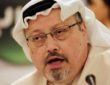
The murder of Jamal Khashoggi has replaced Brett Kavanaugh’s high school days as the mainstream media’s obsession. The media attributes the murder to the Saudi Arabian government. I don’t know whether the evidence conclusively supports this view, but for purposes of this post let’s assume that responsibility lies with the Saudis. The American media calls Khashoggi a journalist, and it’s true that he contributed articles to the Washington Post. However,
»
September 11, 2018 — Paul Mirengoff
Yesterday, the Trump administration ordered the closure of the Palestine Liberation Organization office in Washington, saying that the PLO “has not taken steps to advance the start of direct and meaningful negotiations with Israel.” That’s for sure. The Washington Post’s account of the story is here. You can almost see the tears Karen DeYoung shed writing it. In the paper edition, the story’s subtitle is “another blow to Palentinians.” Perhaps.
»
August 27, 2018 — Paul Mirengoff
The Trump administration has cut more than $200 million in aid for the Palestinian West Bank and Gaza. This decision followed a review by the State Department “to ensure these funds are spent in accordance with U.S. national interests and provide value to the U.S. taxpayer.” According to the Washington Post, the cut “effectively means the United States is giving no money to the Palestinians.” I’m not sure that’s the
»
May 27, 2018 — Steven Hayward

The passing of Bernard Lewis last week at the age of 101 recalls to mind perhaps his most famous book title about the Muslim world, What Went Wrong? But maybe a successor of sorts has been found in Duke University economist Timur Kuran, who has a long article forthcoming in the Journal of Economic Literature that paints a pretty bleak picture of the economic and social structure of Islamic nations.
»
May 25, 2018 — Paul Mirengoff
Several sources report an Israeli attack on a military airport in central Syria, an area where Hezbollah militias are located. There are conflicting reports about whether the attack was successful. Syria claims that its air defense system thwarted the attack. Syrian rebels say Israeli missiles destroyed that air defense system. The Israeli government has yet to comment. Jonathan Spyer, writing in the Jerusalem Post, provides context for the growing number
»
May 8, 2018 — Paul Mirengoff
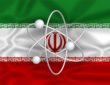
President Trump announced today that the United States will withdraw from the Iran nuclear deal (the Joint Comprehensive Plan of Action—“JCPOA”). Here are talking points sent out by the White House. President Trump is terminating United States participation in the JCPOA, as it failed to protect America’s national security interests. · The JCPOA enriched the Iranian regime and enabled its malign behavior, while at best delaying its ability to pursue
»
April 3, 2018 — Paul Mirengoff
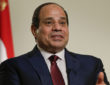
Fresh from attacking President Trump for congratulating Vladimir Putin over his re-election, the mainstream media now tut-tuts Trump for congratulating Egypt’s Abdel Fatah al-Sissi. For example, the Washington Post’s story notes, pointedly, that “Barack Obama declined to invite Sissi to the White House because of concerns about his human rights record.” However one views Trump’s call to Putin ( this was my take), Sissi stands in a very different position.
»
