Supreme Court
January 21, 2023 — Scott Johnson

I read the documents released by the Supreme Court in its investigation of the Dobbs leak as soon as they were posted on the Court’s site Thursday afternoon. They are posted here. Giving the Marshal’s 20-page report on the investigation a close reading several times over, I commented on it in “Dobbs leaker still at large.” I raised the question whether the justices had been interviewed in the course of
»
January 19, 2023 — Scott Johnson
The Supreme Court announced this afternoon that the leaker of the Dobbs draft opinion remains at large. That is unfortunate for many reasons, including the damage done to the Court as an institution and the physical danger to which the leak subjected the justices supporting the draft opinion. It’s also unfortunate that the Biden administration appeared not to give a rip. I gleaned from one of the stories on the
»
January 15, 2023 — John Hinderaker

Perhaps the saddest fact in a sad era is that we are officially a racist society. Our governments at all levels, along with all of our major private institutions, divide Americans into a bizarre schema of racial categories and treat them differently based on those classifications. The whole system is both crazy and corrupt. Law professor David Bernstein is the author of Classified: The Untold Story of Racial Classification in
»
November 2, 2022 — Steven Hayward
If you thought the primal screams from the left after the Dobbs decision were deafening, just wait until after next Tuesday’s election result, and especially next year if the Supreme Court strikes down affirmative action at the end of this term. I expect the left is going to go hoarse from all their primal screaming. The New Republic is especially alarmed that, as they put it in a headline today,
»
November 1, 2022 — John Hinderaker
It is sad that 161 years after Confederates fired on Fort Sumter, and 154 years after the adoption of the 14th Amendment, we are still debating whether public institutions like the University of North Carolina should be able to engage in race discrimination. One might have thought that by now, that issue would have been settled. Liberals seem resigned to the fact that that they now will have to pretend,
»
November 1, 2022 — Scott Johnson
The subject of what goes under the shibboleth of “affirmative action” is both close to my heart and one about which I have frequently written, usually drawing on Andrew Kull’s legal history The Color-Blind Constitution. Published by Harvard University Press in 1998, it remains a terrific book. If Kull updated it to take cases of the past 25 years into account, the update would vindicate his analysis. One cannot miss
»
October 31, 2022 — John Hinderaker
I haven’t seen or read a transcript of today’s Supreme Court hearing. Scott or Steve may offer more informed commentary shortly. But, based on news accounts, the day seems to have gone well for opponents of race discrimination in higher education. The pro-discrimination Washington Post is inconsolable: Conservative justices on Monday seemed open to ending decades of Supreme Court precedent allowing race-conscious admission decisions at colleges and universities, repeatedly expressing
»
October 31, 2022 — John Hinderaker
Today the Supreme Court heard historic arguments on legal challenges to anti-Asian race discrimination by Harvard and the University of North Carolina. I will have more to say about that shortly, but first I want to note a missive that Harvard’s President, Lawrence Bacow, sent to the university’s alumni this morning via email. The communication (signed “Larry”) is also viewable here. Bacow rehearses the tired excuses for race discrimination: Whatever
»
October 2, 2022 — Scott Johnson
Linda Brown was the young girl who gave her name to the four cases consolidated for consideration in Brown v. Board of Education, the 1954 Supreme Court case that effectively invalidated the regime of public school segregation. She died in 2018 at the age of 75 or 76. Neil Genzlinger’s New York Times obituary recounted her story. Genzlinger dealt inadequately with the Brown case. “In its ruling,” he wrote, “the
»
July 25, 2022 — Scott Johnson

The status of the investigation ordered by Chief Justice Roberts following the leak of Justice Alito’s Dobbs opinion to Politico remains shrouded in mystery. The AP reports that the Supreme Court is resting on its right to remain silent: The Supreme Court won’t say whether it’s still investigating. The court also won’t say whether the leaker has been identified or whether anyone has been disciplined. Or whether an outside law
»
July 16, 2022 — Steven Hayward
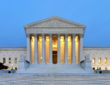
Cast your mind back to 2016 for a moment, when it seemed a lock that Hillary Clinton would win the election, and nominate a leftist to succeed Justice Scalia. (Remember that Hillary refused to commit to re-sending the nomination of Merrick Garland—a clear signal to progressives that she’s pick someone younger and more progressive.) Mark Tushnet, one of the leading leftists at Harvard Law School, let loose with his id
»
July 10, 2022 — John Hinderaker
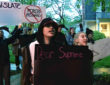
The Left has a rather schizophrenic attitude toward protests and demonstrations. Some are wonderful, like the George Floyd riots, which were not, in fact, protests at all. Or like arson and other destruction committed at pro-life facilities. Others are detestable, like the Dutch farmers’ protests, or the French “yellow vests,” or the Canadian truckers. Some protests, too, can only be ignored, like when hundreds of thousands of pro-life citizens show
»
July 9, 2022 — Scott Johnson
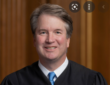
I expressed admiration for Morton’s statement condemning the harassment of Justice Kavanaugh at the steakhouse chain’s downtown D.C. restaurant on Wednesday evening. Politico Playbook had sought and published Morton’s statement (quoted in the linked post) in its account of the events. Morton’s must of course be punished for speaking up on behalf of its customers (and its business). I observed that the Playbookers seemed to think the whole thing was
»
July 8, 2022 — Scott Johnson
The harassment of conservative Supreme Court justices manifested at Morton’s in the District of Columbia on Wednesday evening. While Justice Kavanaugh ate dinner at the downtown steakhouse, protesters were tipped to his presence. The protesters showed up out front, called the Morton’s manager to tell him to kick Justice Kavanaugh out, and later tweeted that the justice was forced to exit through the rear of the restaurant. In response to
»
June 30, 2022 — John Hinderaker
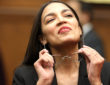
Liberals are gnashing their teeth over today’s decision by the Supreme Court in West Virginia v. EPA, in which the Court found that Congress has not delegated to the EPA power to reduce CO2 emissions by rearranging the country’s electricity producing system. The case, and the Left’s reaction to it, have several interesting features. First, the Court has erected a barrier, at least in this instance, against the seemingly inexorable
»
June 30, 2022 — Steven Hayward
The Supreme Court closed out its current term this morning with yet another significant victory for the cause of limited government, ruling in West Virginia v. EPA that the EPA could not treat the Clean Air Act as a writ to do anything it wants to America’s electric utility sector. Chief Justice Roberts wrote the opinion for a 6 – 3 majority (guess who the three dissenters are), and on
»
June 30, 2022 — Scott Johnson
Can the left amp up the hysteria past 11 to 12 or 13? The Supreme Court ruled against the EPA this morning in a 6-3 decision written by Chief Justice Roberts. The case is West Virginia v. EPA. Politico offers this brief summary: The Supreme Court dealt a major blow to President Joe Biden’s climate strategy, ruling that the Environmental Protection Agency has only limited authority to regulate carbon dioxide
»
