Syria
October 28, 2021 — Paul Mirengoff
In case you missed it — and it’s easy to have done so given media lack of coverage — pro-Iranian forces launched a drone attack last week on a U.S. outpost in Syria. No U.S. casualties have been reported, but that’s no thanks to the attackers. Iranian media celebrated the attack, which it credited to something called Allies of Syria. This is a militia controlled by Iran through its Islamic
»
August 3, 2020 — Paul Mirengoff
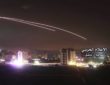
The Israeli military carried out airstrikes against Syrian targets Monday night. The strikes were a response to an attempted terrorist attack that was thwarted along the Syrian border on Sunday night. The thwarted attack consisted of four terrorists planting explosive devices inside Israel. IDF forces spotted them, opened fire, and thwarted the attack. Reportedly, all four terrorists were killed. Afterwards, the Israelis found weapons and a bag containing explosive devices
»
March 6, 2020 — Paul Mirengoff
With so much focus on the coronavirus and the Democratic primaries, the media has paid scant attention to two related developments: (1) war between Turkey and Syria and (2) refugees trying to push their way en masse from Turkey into Greece. Turkey has been at war with Syria, and by extension Russia, for a few weeks. The war stems from the push by the Syrian regime, with its usual Russian
»
November 11, 2019 — Paul Mirengoff
This week, President Trump will welcome Turkish President Tayyip Erdogan to the White House. The visit is a coup for Erdogan. It enables him to show that he got his way in Syria at the expense of America’s main partner in the fight against ISIS, yet remains in Trump’s good graces. Thus, there is no doubt as to why Erdogan agreed to come here. But why did Trump reward Erdogan
»
October 24, 2019 — Paul Mirengoff
Yesterday, President Trump spoke about the cease-fire in northeastern Syria. He declared it a major diplomatic victory for the administration. Trump noted that critics had “scorned” him for removing U.S. troops from areas controlled by the U.S. and our Kurdish allies. “Now,” claimed Trump, “people are saying ‘Wow, what a great outcome — congratulations.'” Most of Trump’s critics aren’t saying this, though. They complain that Trump has opened the door
»
October 21, 2019 — Paul Mirengoff
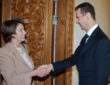
Nancy Pelosi is dabbling in Middle East policy again. She’s leading a congressional delegation to Jordan to discuss Middle East “peace” and Syria with members of the royal family. This isn’t Pelosi’s first foray into Syrian matters. More than a decade ago, she met with Syria’s Bashar al-Assad. At that time, she pronounced Assad the key bringing peace to the Middle East. “The road to peace is through Damascus,” the
»
October 17, 2019 — John Hinderaker
I don’t pretend to understand what has been going on in northern Syria in the last week or so. My understanding is that Turkey has limited objectives in the area that are not entirely illegitimate, that the handful of troops that we had in the area couldn’t have stopped the Turkish advance, and that President Trump pulled our troops out of harm’s way in recognition of the inevitable. But that
»
October 16, 2019 — Paul Mirengoff

There are respectable arguments in favor of the pullback of U.S. troops in northeastern Syria. I don’t find them persuasive, but they are serious. Unfortunately, President Trump persists in making ludicrous arguments. One of them, the fact that the Kurds didn’t help us with the Normandy invasion, I discussed here. I hoped that this argument was a throwaway — a one-off. No such luck. Now, Trump is claiming that the
»
October 13, 2019 — Paul Mirengoff
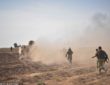
Yesterday, I noted that as a result of President Trump’s decision to pull back U.S. troops from northeastern Syria, raids against ISIS in other parts of Syria have been curtailed. Today comes word of other adverse consequences. One is Turkish atrocities and, perhaps, war crimes. Allahpundit at Hot Air has the relevant links for those with the stomach to check them out. In the age of “America First,” we’re no
»
October 13, 2019 — Paul Mirengoff

Two things can be true: (1) President Trump’s decision to pull back U.S. forces in northwestern Syria was a good decision; (2) Turkey is an ally in name only and no friend of America. I don’t believe the first statement is true. However, the pullback is a done deal. We can argue about its merit, and I expect to keep doing so, but arguing won’t change the outcome. By contrast,
»
October 13, 2019 — Scott Johnson

I have found Michael Doran to be one of our most insightful analysts of American foreign policy in the Middle East. See, for example, his 2015 Mosaic essay “Obama’s secret Iran strategy” or any of his many other Mosaic essays posted here. Doran does not find the choices available to President Trump in Syria as simple as does the chorus from whom we have heard over the past week. Perhaps
»
October 12, 2019 — Paul Mirengoff
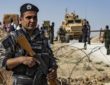
The Washington Post reports that the Turkish invasion of northeastern Syria has forced the U.S. military and its Kurdish allies to curtail significantly their shared military operations against ISIS. The Kurds, under attack by their deadly enemy, have turned their attention to defending themselves from the Turks. Reportedly, hundreds of Kurdish-led fighters with the Syrian Democratic Forces (SDF) have relocated to the front lines of the fight with Turkey, and
»
October 12, 2019 — Paul Mirengoff

Defenders of President Trump’s decision to remove U.S. troops from a portion of Syria, thereby enabling Turkey to have at the Kurds, make a number of arguments in favor of that move. I don’t find any of them persuasive, but some are better than others. The worst argument I know of comes from Trump himself. He points out that the Kurds didn’t help us at Normandy. He’s right, they didn’t.
»
October 11, 2019 — John Hinderaker
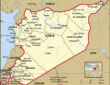
Liberals’ foreign policy views are inconsistent, but entirely predictable: whatever a Republican president does, they oppose. Thus, Democrats applauded when President Obama prematurely withdrew American troops from Iraq, enabling the rise of ISIS. But when President Trump pulled a few hundred out of Syria, it was: OMG! The Kurds! James Carafano of the Heritage Foundation and the Institute of World Politics gave an interview to the Daily Signal that gives
»
October 7, 2019 — Paul Mirengoff
Late yesterday, the White House announced that U.S. forces in northeastern Syria will stand down. This clears the way for Turkey to attack the Kurdish forces who fought alongside American troops in defeating ISIS (for the moment). Turkish President Erdogan, no friend of the U.S. and certainly no reliable partner, says that American troops have already started moving out of the area. Approximately 1,000 of them have been stationed there.
»
August 20, 2019 — Paul Mirengoff
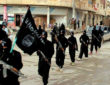
The New York Times reports that ISIS is gathering new strength and conducting guerrilla attacks across Iraq and Syria. Observers are confident that ISIS won’t reclaim anything like its former physical territory, a “caliphate” that was the size of Britain and controlled the lives of up to 12 million people. However, if it continues to gain strength, ISIS may soon become a force to be reckoned with and could control
»
June 19, 2019 — Paul Mirengoff

Mustafa Alowemer, a 21-year-old man who was admitted to the U.S. as a refugee from Syria, has been arrested on terrorism charges for planning to attack a Pittsburgh church, the Legacy International Worship Center. Alowemer faces one count of attempting to provide material support and resources to ISIS, and two counts of distributing information relating to an explosive, destructive device, or weapon of mass destruction. Alowemer was born in Daraa,
»
