Al Qaeda
April 21, 2014 — Paul Mirengoff
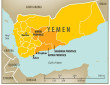
In a post called “Al Qaeda’s day out,” I criticized the Obama administration for backing away from drone strikes against that outfit in the terrorist hotbed of Yemen. Therefore, it is only fair that I give the administration credit for launching an aggressive drone strike campaign over the weekend in Yemen against al Qaeda in the Arabian Peninsula (AQAP). In one drone strike the U.S. targeted AQAP’s top bomb maker,
»
February 17, 2014 — Paul Mirengoff
The Washington Post reports that senior al Qaeda officials long sheltered by Iran have exited that country in the past year or two. These al Qaeda officials migrated to Iran when, following 9/11, the U.S. began taking out the organization’s top leaders. The departing officials include Thirwat Shihata who was the deputy of Ayman al-Zawahiri, al-Qaeda’s current leader, when he ran Egyptian Islamic Jihad; Nazih Abdul-Hamed al-Ruqai, accused in the
»
February 8, 2014 — Paul Mirengoff
Jeh Johnson, who recently became Homeland Security Secretary, has delivered his first policy address. He devoted part of his speech, delivered at the Woodrow Wilson Center, to pushing for immigration reform, including a path to citizenship for illegal immigrants. The fact that the implementation of immigration reform legislation would, in no small measure, be in the hands of a left-liberal partisan like Johnson provides additional reason, if any were needed,
»
February 2, 2014 — Paul Mirengoff
Katherine Zimmerman of AEI, whose work we have highlighted before, wrote an op-ed in Sunday’s Washington Post about the need to formulate a reasonable definition of al Qaeda. The whole column is worth reading, but I was struck most by her explanation of why the military won’t take action against the perpetrators of the Benghazi attack: Here’s the problem: According to recently declassified testimony of Gen. Martin Dempsey, chairman of
»
January 22, 2014 — Paul Mirengoff

In his recent interview with The New Yorker, President Obama referred to today’s al-Qaeda fighters as the “jayvee” team. Obama stated: The analogy we use around here sometimes, and I think is accurate, is if a jayvee team puts on Lakers uniforms that doesn’t make them Kobe Bryant. It’s not surprising that Obama takes this position. As Steve Bucci of the Heritage Foundation reminds us, before Benghazi, Obama claimed that
»
January 19, 2014 — John Hinderaker
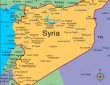
Once upon a time it was Afghanistan where would-be jihadis went to receive training in terror tactics, so that they could return to their home countries and wreak havoc. Now, the Telegraph says, the jihadi destination of choice is Syria: “Al-Qaeda training British and European ‘jihadists’ in Syria to set up terror cells at home.” British people fighting in Syria are being trained as “jihadists” and then encouraged to return
»
January 9, 2014 — Paul Mirengoff

David Kirkpatrick of the New York Times is trying to salvage some credibility in the aftermath of the refutation, including by the Washington Post, of his revisionist account of the attack in Benghazi. As Tom Joscelyn shows, Kirkpatrick does not succeed. In his initial piece, Kirkpatrick ruled out any meaningful involvement in the attack by ex-Guantanamo detainee Sufian Ben Qumu, who has longstanding ties to al Qaeda and is currently
»
January 7, 2014 — Paul Mirengoff
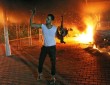
According to the Washington Post, U.S. officials suspect that a former Guantanamo Bay detainee played a role in the attack on the American diplomatic compound in Benghazi. The U.S. government is said to be planning to designate the group he leads as a foreign terrorist organization. The terrorist and former Gitmo detainee in question is Abu Sufian bin Qumu, leader of Ansar al-Sharia in the Libyan city of Darnah. Witnesses
»
January 5, 2014 — Paul Mirengoff
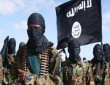
Remember when, during the Bush administration, the left and its MSM supporters insisted that U.S. intervention in Iraq and Afghanistan was causing Muslims to flock to al Qaeda? I wonder what the left and the MSM have to say now that al Qaeda is running rampant following President Obama’s withdrawal from the region? There was never credible evidence to support the left’s self-serving claim that our interventions were boosting al
»
January 1, 2014 — Paul Mirengoff

David Kirkpatrick of the New York Times continues to claim that, notwithstanding the reporting of his own newspaper, claims of an al Qaeda connection to the Benghazi attack are “bogus” or, alternatively, “tenuous” (which is it, David?). How does Kirkpatrick square his claim with the Times’ reporting? By mischaracterizing that reporting. He told Anderson Cooper: I think that the reporting in our paper [of involvement by Muhammad Jamal’s terrorist group
»
November 1, 2013 — Paul Mirengoff
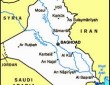
I wrote here and here about the unraveling of Iraq that has followed the withdrawal of American troops and the failure of the Obama administration to negotiate a status of forces agreement with the Maliki government. I also noted that Maliki would be in Washington this week seeking help from President Obama. The U.S. has a clear interest in helping the Maliki government stem the tide of violence and terrorism
»
October 7, 2013 — Paul Mirengoff

Over the weekend, the U.S. conducted two raids in Africa against terrorists. In Libya, we captured Nazih Abdul-Hamed al-Ruqai, alias Abu Anas al-Liby, who is wanted for the bombing of two U.S. embassies in Africa in 1998. In Somalia, we targeted a senior leader of the Shabab, the Islamist terrorist group responsible for the massacre at the Westgate mall in Nairobi. We don’t know whether we killed the target. Scott
»
September 26, 2013 — Paul Mirengoff
The only thing unraveling faster than Syria is President Obama’s Syria policy. There is, of course, a relationship between the two downward spirals. This morning comes word that eleven of the biggest armed factions among the Syrian rebels have repudiated the Western-backed opposition to the Assad regime and formed an alliance dedicated to establishing an Islamic state. Jabhat al-Nusra, an al Qaeda affiliate, is the lead signatory to this new
»
September 23, 2013 — Paul Mirengoff

Earlier this month, I argued that the U.S. is not really winning the war against al Qaeda. Although we have mainly succeeded against al Qaeda groups in Pakistan, at least for the time being, I noted that al Qaeda, having fundamentally shifted its approach, has become a global network. As such, it is arguably stronger today than it was in 2001. Events this weekend, highlighted here by Max Boot, tend
»
September 16, 2013 — Paul Mirengoff
Jessica Lewis of the Institute for the Study of War (ISW) was a decorated intelligence officer for the U.S. Army. She performed that role in both Iraq and Afghanistan. Lewis is the author of a new ISW report called “Al Qaeda in Iraq is Resurgent.” It’s always nice when a report gets to the point in the title, even if the point isn’t nice. Al-Qaeda in Iraq (AQI) reached its
»
September 13, 2013 — Paul Mirengoff

One of the strongest-sounding arguments against intervening in Syria is the fear that, by “degrading” Assad’s power, we will increase the odds that jihadist, al Qaeda affiliated rebels will come to power. It was this fear that caused me to suggest last year that a stalemate between Assad and the rebels might be the best outcome. Only after the tide of the civil war seemed to turn in favor of
»
September 6, 2013 — Paul Mirengoff

During the Senate Foreign Relations Committee’s hearing on Syria this week, Sen. Corker referred several times to the “vetted opposition” to Bashar al-Assad. Corker had in mind, I gather, the Free Syrian Army which is deemed by Secretary of State Kerry, John McCain, Lindsey Graham, and others to be an effective, non-extremist, and not wholly corrupt rebel fighting force. How seriously should we take the vetting of the Free Syrian
»
