Afghanistan
May 27, 2026 — Scott Johnson

Over the Memorial Day weekend this past Sunday, Margaret Brennan hosted two Medal of Honor recipients on the CBS News gabfest known as Face the Nation. Rush used to refer to it as Deface the Nation. Retired Army Lieutenant Colonel William Swenson and retired Army Command Sergeant Major Matthew Williams appeared on the show to discuss military service, martial valor, and the promise of America. Then Captain Swenson’s Medal of
»
November 27, 2025 — Bill Glahn

We interrupt the current cold civil war to bring you coverage of the onset of the color revolution in America. The clearest sign is a literal sign, a billboard outside of Fort Bragg in Fayetteville, North Carolina. From the Fayetteville Observer, Billboard in Fayetteville asks airborne soldiers if they joined the Army to serve ICE. The Observer reports, A new ad campaign on a Skibo Road billboard in Fayetteville encourages
»
October 11, 2025 — Bill Glahn

From the U.K. Guardian, Heavy clashes erupt along Pakistan-Afghanistan border: Escalation comes after Pakistani airstrike in Kabul, with Taliban launching reprisals against military posts. This seems like it should be a big deal, but I haven’t seen much news coverage of it. The who, what, when, and where all seem clear enough. But I’m still shaky on the why. The Guardian reports, While Islamabad has not explicitly claimed responsibility for
»
October 1, 2025 — Bill Glahn

From the BBC, Afghanistan telecom blackout as Taliban shuts off internet. No, really. The Taliban in Afghanistan have imposed a nationwide shut down of telecommunications, weeks after they began severing fibre-optic internet connections to prevent what they call immorality. The country is currently experiencing a total connectivity blackout, internet watchdog, Netblocks reports. That report was from yesterday, apparently the Taliban is now claiming that they turned the internet back on.
»
September 15, 2025 — Bill Glahn

From BBC News, ‘My wife died giving birth after Trump cut funding to our clinic.’ You, dear reader, no doubt have the same question I did when first reading this headline: where in the world did Trump travel in order to commit this murder? Before I answer, I’ll post the trigger warning that the BBC included in the piece, Warning: Readers may find some details in this article distressing. You’ve
»
December 12, 2024 — Scott Johnson
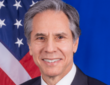
Secretary of State Antony Blinken testified yesterday before the House Foreign Affairs Committee on the catastrophic withdrawal from Afghanistan. Blinken is a complete and utter tool. He is of course the guy who solicited the corrupt statement signed by the Dirty 51 impugning the authenticity of the evidence found on Hunter Biden’s laptop. That may have been a stroke of evil genius, but Blinken sounds like the man who taught
»
September 12, 2024 — Scott Johnson
Fox News gives us a glimpse of the deep thoughts of Biden NSC spokesman John Kirby in the long story headlined “Kirby: ‘No use in responding’ to a ‘handful of vets’ on Biden’s botched Afghan withdrawal.” Subhead: ‘Obviously no use in responding. A handful of vets indeed and all of one stripe,’ Kirby said in a ‘reply all’ email chain.” Fox News sought comment from Kirby on criticism of our
»
September 2, 2024 — Scott Johnson
Senator Tom Cotton is the author of Sacred Duty: A Soldier’s Tour at Arlington National Cemetery (2019). I wrote about it here on its publication date. It is a moving account of Senator Cotton’s service in the Old Guard along with a history of the Army’s oldest infantry unit. Service in the Old Guard is generally by application and requires rigorous training. Few can meet its incredibly imposing standards. Acceptance
»
September 1, 2024 — John Hinderaker
I wrote earlier today about the Democrats’ suicidal attempt–the Charge of the Light Brigade comes to mind–to turn President Trump’s appearance at Arlington National Cemetery, at the invitation of families who lost loved ones due to the Biden/Harris administration’s incompetent withdrawal from Afghanistan, to their political advantage. It was one of the most craven political maneuvers of recent times, and it has backfired gloriously. This morning on Meet the Press
»
September 1, 2024 — John Hinderaker
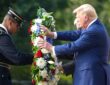
On Monday, President Trump attended a wreath-laying ceremony at Arlington National Cemetery that honored the 13 service members who were killed by the Taliban at Kabul Airport in 2021. Trump was accompanied by a photographer and videographer, and the ceremony produced stirring images: Democrats criticized Trump’s visit, alleging that he was “politicizing” the cemetery, the deaths of the service members, or both. Initially such criticisms were muted, but the Democrats
»
August 27, 2024 — Lloyd Billingsley

Three years after the Afghanistan debacle, John finds it “impossible to understand how the Biden administration could have organized the withdrawal so poorly.” The simplest explanation comes from Biden, who called the withdrawal an “extraordinary success,” so it was what the Delaware Democrat wanted to happen. That invites a look back at one of Biden’s key handlers. Tom Donilon worked in the Carter administration and served as campaign coordinator for
»
August 26, 2024 — John Hinderaker

The Biden administration’s withdrawal from Afghanistan was a fiasco in several ways. Thirteen American service members were killed during the chaotic scene at Kabul’s airport. Billions of dollars in American war materiel were left behind, which the Taliban now proudly parades like a Roman triumph. The chaotic scene in which thousands of Afghans tried desperately to flee, reminiscent of South Vietnam, will not be forgotten. It is impossible to understand
»
August 26, 2024 — Scott Johnson
President Biden put his foreign policy perversity vividly on display for all the world to see in our exit from Afghanistan. It served Biden’s vanity while putting the world on notice of the new American unseriousness. It also reminded us of the apothegm Robert Gates’s 2014 memoir Duty: Memoirs of a Secretary at War: “I think [Joe Biden] has been wrong on nearly every major foreign policy and national security
»
August 16, 2024 — Lloyd Billingsley
As Scott notes, the Taliban are partying down at the Bagram air base, showing off the military gear the Biden-Harris administration bequeathed them. This party wasn’t the first celebration of the Taliban’s triumph. We have won!!! All praises be to All-Mighty Allah! Congratulations on your victory over those who hate for the Laws of All-Mighty God to be supreme on the land. I pray to Allah that He helps you
»
August 15, 2024 — Scott Johnson
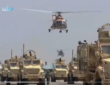
The signature foreign policy “achievement” of the Biden/Harris administration must be our Afghanistan exit, pursued by a Taliban bear. Yesterday the Taliban celebrated the third anniversary of their victory with a party and parade at the Bagram Air Base featuring the materiel we left behind (video below). The AP reported on the festivities in a story datelined Kabul: Under blue skies and blazing sunshine at the Bagram base — once
»
July 18, 2024 — Scott Johnson
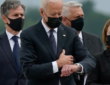
President Biden claims that no American soldiers have died under his watch. Given his senility, perhaps he can be forgiven for forgetting those who died under his watch in our disgraceful exit from Afghanistan. Jerry Dunleavy wrote the book on the fiasco and tweeted out the devastating video featuring the Gold Star families from last evening’s program at the Republican National Convention. Biden’s senility does not excuse his conduct at
»
August 8, 2023 — Scott Johnson

Rep. Darrell Issa convened a public forum for the Gold Star families of service members killed in the 2021 attack at the airport in Kabul to say their piece. Family members told their stories as they sought answers and accountability for the chaotic withdrawal from Afghanistan during which 11 sons and two daughters were lost. The forum was held in the main council chamber of Escondido City Hall. President Biden
»
