The Trump administration is taking the position that federal law does not just permit the government to detain illegal immigrants, it requires such detention. This position has inspired outrage on the left, and circuits that have addressed the issue have split. So it is on to the Supreme Court.
The question is a tricky one, involving interpretation of a law that is not particularly well drafted. That is probably due, at least in part, to the fact that when our immigration laws were being written, it never occurred to anyone that a future administration would intentionally allow many millions of illegal aliens across our border.
Law professor Ilan Wurman addresses the mandatory detention issue on the rationally BASED substack. The analysis is rather intricate and you really should read the whole thing, but here is one important part:
2. The detention clause
That clause provides, in 8 U.S.C. § 1225(b)(2):
“[I]n the case of an alien who is an applicant for admission, if the examining immigration officer determines that an alien seeking admission is not clearly and beyond a doubt entitled to be admitted, the alien shall be detained for a proceeding under section 1229a of this title.”
The question is, are all applicants for admission “seeking” admission, such that even those who evaded inspection and have lived in the U.S. for, say, twenty years, are subject to this mandatory detention provision?
This is a hard question.
It’s hard because the arguments on both sides create oddities. If they’re the same (as the Trump Administration argues), then why didn’t Congress just say, “if an applicant for admission is not clearly and beyond doubt entitled to be admitted, he shall be detained”? The Trump Administration view creates a weird redundancy.
But the other argument also creates an oddity. If, as several courts have said, only aliens who are literally “seeking” admission at the time they are inspected can be detained, then it would apply only to arriving aliens. But then why didn’t the statute say that? After all, the rest of that section uses the word “arriving aliens” when it wants to talk about them.
So both views create some sort of oddity. In our view, the answer decisively favors the Trump Administration view, at least as a textual matter, based on the next two provisions.
Follow the link to see why Ilan and his podcast co-host, American Experiment’s Kathryn Johnson, think the Trump administration has the better of the argument. Or else you can watch or listen to the latest episode of the rationally BASED podcast, most of which is devoted to this issue (Virginia Democrats are savaged in the first part):
What are the administration’s chances in the Supreme Court? Conventional wisdom would say, probably less than 50/50, somewhat like the birthright citizenship case, to which Ilan draws an analogy in the linked Substack post. But there is a good chance of winning, aided by Ilan’s scholarship. It would help if we had more based law professors. This is one of many instances where the left-wing takeover of the academy continues to do damage, even though it has been widely exposed and generally discredited.
Finally, Ilan has written a book titled The Constitution of 1789: A New Introduction, timed to coincide with the 250th anniversary of our founding. It deals with the structure of our federal government, the powers of the legislative, executive and judicial branches, but not with the Bill of Rights, added later.
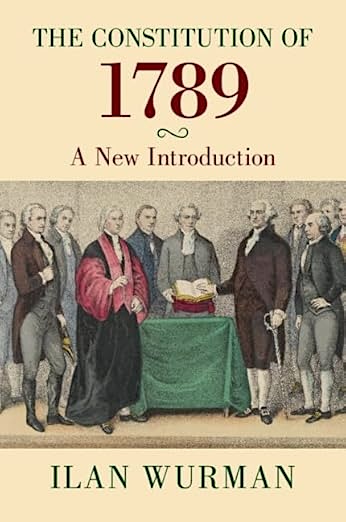
Ilan’s book is now available for pre-order. I plan to buy it.
