In February, Paramount Skydance agreed with Warner Bros. Discovery to acquire that company for $111 billion. The agreement followed a convoluted battle between Paramount and Netflix to be the buyer, which Paramount ultimately won.
The Antitrust Division of the Department of Justice cleared the acquisition last month, finding no anticompetitive impact. The Antitrust Division is highly respected; its analyses are largely mathematical and look at the pricing implications of alleged market concentration. Here, it found no adverse impact on consumers.
The properties being acquired by Paramount include Warner Bros. Studios, HBO, Discovery’s streaming services, and cable channels including the Discovery Channel, HGTV, TBS, and CNN.
America’s media market is highly fragmented, and free marketeers like those at the Committee to Unleash Prosperity have endorsed the deal:
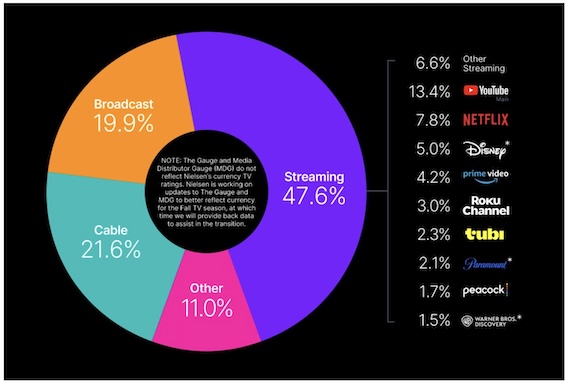
[T]here may be no industry in American history that has more cutthroat competition than moviemaking and entertainment. Cable TV is in rapid decline as yesterday’s technology, with most young people getting TV and video on their cellphones or streaming services. As we’ve also reported, the 20th century big Hollywood studios are slashing their workforces as swarms of independent movie producers are making films in their basements or garages or in abandoned warehouses. Protecting Hollywood studios is like protecting rotary phones.
Here’s one sneak preview chart from our forthcoming study on the merger, which estimates $20 billion of economic gain from the merger.
Notwithstanding the Antitrust Division’s seal of approval, liberals bitterly oppose the merger. I take it that the main reason is that CNN is one of the many acquired properties, and Paramount Skydance is regarded by the Left as a conservative-leaning company that has already bought CBS. Thus, 12 Democrat-led states, including California, sued to block the transaction.
It is possible that a similar lawsuit may have succeeded at some point in the past, but if so, I am not aware of it. It is hard to believe that these Attorneys General have come up with a statistical analysis superior to that of the economists at the Department of Justice. Their case is, I think, entirely political.
Nevertheless, earlier today a federal judge named Araceli Martínez-Olguín, appointed in 2022 by Joe Biden, issued an order blocking the transaction for 14 days, pending a hearing on the plaintiffs’ preliminary injunction motion. For the time being, the $111 billion transaction will not be able to proceed.
Who is Araceli Martínez-Olguín? When she was nominated to the federal bench by Joe Biden, her background was that of a left-wing activist. After working in the Office of Civil Rights at the Department of Education, she was the Managing attorney of the Immigrants’ Rights Project at Community Legal Services in East Palo Alto, and then served as a Supervising attorney at the National Immigration Law Center. I think it is fair to say that her brief career has largely been spent as an advocate for illegal immigration.
Martínez-Olguín’s nomination to the bench by Joe Biden was controversial. The Senate narrowly confirmed it in February 2023 on a 49-48 vote, with no Republicans voting in favor. I don’t know whether facts came to light in the confirmation process, above and beyond the obvious, to cause Republicans to vote against her.
It is hard to imagine that Martínez-Olguín’s temporary restraining order will lead to a long-term blockage of the Warner Bros. transaction. If it did, it would set a terrible precedent of politically-motivated punishment of corporations for partisan reasons. But in today’s brave new leftist world, you never know.
