Lincoln
May 9, 2026 — Scott Johnson
In his famous 1855 letter to his old friend Joshua Speed, Abraham Lincoln explained (emphases in original): I am not a Know-Nothing. That is certain. How could I be? How can any one who abhors the oppression of negroes, be in favor or degrading classes of white people? Our progress in degeneracy appears to me to be pretty rapid. As a nation, we began by declaring that “all men are
»
April 27, 2026 — Scott Johnson
You may have heard about the apologia for the murder of Brian Thomopson under the auspices of the New York Times by one Hasan Piker. It appears in the transcript of a conversation published April 29 with the headline (quoting Piker) “The Rich Don’t Play by the Rules. So Why Should I?” If you are so fortunate as to have lived your life in blissful ignorance of Piker, Jim Geraghty
»
February 12, 2026 — Scott Johnson
Abraham Lincoln stands not only as America’s greatest president but also as its greatest lawyer. At the time of his election to the presidency in 1860 he was the most prominent practicing lawyer in the state of Illinois. As a politician and as president, Lincoln was a profound student of the Constitution and constitutional history. Perhaps most important, Lincoln was America’s indispensable teacher of the moral ground of political freedom
»
February 12, 2026 — Scott Johnson

Today is the anniversary of the birth of America’s greatest president, Abraham Lincoln. As a politician and as president, Lincoln was a profound student of the Constitution and constitutional history. Perhaps most important, Lincoln was America’s indispensable teacher of the moral ground of political freedom at the exact moment when the country was on the threshold of abandoning what he called its “ancient faith” that all men are created equal.
»
February 11, 2026 — Scott Johnson

I am warming up for our customary celebration of the birthday of Abraham Lincoln tomorrow. By 1940 Lincoln’s birthday was observed as a holiday in 24 states and the District of Columbia. Now we can read “How Abraham Lincoln lost his birthday holiday.” I’m old-school on the recognition of Lincoln’s greatness. His birthday should be a national holiday. Lincoln not only saved the Union, he also foresaw the difficulty of
»
February 12, 2025 — Scott Johnson
Abraham Lincoln stands not only as America’s greatest president but also as its greatest lawyer. At the time of his election to the presidency in 1860 he was the most prominent practicing lawyer in the state of Illinois. As a politician and as president, Lincoln was a profound student of the Constitution and constitutional history. Perhaps most important, Lincoln was America’s indispensable teacher of the moral ground of political freedom
»
February 12, 2025 — Scott Johnson
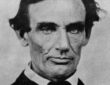
Today is the anniversary of the birth of America’s greatest president, Abraham Lincoln. As a politician and as president, Lincoln was a profound student of the Constitution and constitutional history. Perhaps most important, Lincoln was America’s indispensable teacher of the moral ground of political freedom at the exact moment when the country was on the threshold of abandoning what he called its “ancient faith” that all men are created equal.
»
February 11, 2025 — Scott Johnson

I wrote the post below when the film Lincoln was released in 2012. I thought some readers might find it of interest today. My purpose here was to take up the movie in the context of Richard Hofstadter’s famous essay on Lincoln — an essay which is all that bright high-school students may ever learn about him. I have inserted links to the publisher’s pages of the books cited. This
»
March 29, 2024 — Scott Johnson
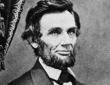
John Hinderaker knows the history of the Civil War about as well as anyone I know, so I’m sure he’s ever more familiar with the case against secession than I am. His case for secession is pretty, pretty good, but I believe it runs contrary to the Constitution as well as American tradition and history. I thought the case was decided more or less definitively against it by the Civil
»
February 12, 2024 — Scott Johnson

I wrote the post below when the film Lincoln was released in 2012. I thought some readers might find it of interest today. My purpose here was to take up the movie in the context of Richard Hofstadter’s famous essay on Lincoln — an essay which is all that bright high-school students may ever learn about him. I have inserted links to the publisher’s pages of the books cited. We
»
February 12, 2024 — Scott Johnson
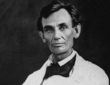
Abraham Lincoln stands not only as America’s greatest president but also as its greatest lawyer. At the time of his election to the presidency in 1860 he was the most prominent practicing lawyer in the state of Illinois. As a politician and as president, Lincoln was a profound student of the Constitution and constitutional history. Perhaps most important, Lincoln was America’s indispensable teacher of the moral ground of political freedom
»
February 12, 2024 — Scott Johnson
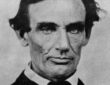
Today is the anniversary of the birth of America’s great or greatest president, Abraham Lincoln. As a politician and as president, Lincoln was a profound student of the Constitution and constitutional history. Perhaps most important, Lincoln was America’s indispensable teacher of the moral ground of political freedom at the exact moment when the country was on the threshold of abandoning what he called its “ancient faith” that all men are
»
July 4, 2023 — Scott Johnson
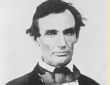
On July 9, 1858, Illinois Senator Stephen Douglas gave a campaign speech to a raucous throng from the balcony of the Tremont Hotel in Chicago. Abraham Lincoln was in the audience as Douglas prepared to speak. Douglas graciously invited Lincoln to join him on the balcony to listen to the speech. In his speech Douglas sounded the themes of the momentous campaign that Lincoln and Douglas waged that summer and
»
February 12, 2023 — Scott Johnson
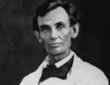
Abraham Lincoln stands not only as America’s greatest president but also as its greatest lawyer. At the time of his election to the presidency in 1860 he was the most prominent practicing lawyer in the state of Illinois. As a politician and as president, Lincoln was a profound student of the Constitution and constitutional history. Perhaps most important, Lincoln was America’s indispensable teacher of the moral ground of political freedom
»
February 12, 2023 — Scott Johnson
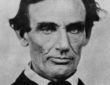
Today is of course the anniversary of the birth of America’s great or greatest president, Abraham Lincoln. As a politician and as president, Lincoln was a profound student of the Constitution and constitutional history. Perhaps most important, Lincoln was America’s indispensable teacher of the moral ground of political freedom at the exact moment when the country was on the threshold of abandoning what he called its “ancient faith” that all
»
December 19, 2022 — Scott Johnson

I have a happy memory of taking my two youngest daughters to hear Andrew Ferguson read from his then new book Land of Lincoln at Magers & Quinn Booksellers in the Uptown neighborhood of Minneapolis back in June 2007. Andy greeted us warmly and we all greatly enjoyed the reading. (To that happy memory I can join the current observation that Magers & Quinn is with us yet. It is
»
August 18, 2022 — Scott Johnson

In the Rolling Stone Illustrated History of Rock & Roll (revised 1980 edition), Janet Maslin wrote the chapter on Bob Dylan. She included the photo of the folkie Dylan posing with a cigarette dangling from his lips and a guitar in his lap. Maslin supplied the caption: “The conscience of a generation, trying to smoke and sing simultaneously.” (The photo is accessible here.) Liz Cheney followed in Dylan’s footsteps with
»
