History
April 24, 2024 — Lloyd Billingsley

Joe Biden believes that his uncle, Second Lt. Ambrose J. Finnegan Jr., could have been eaten by cannibals after being shot down over Papua New Guinea during World War II. There is no evidence for the claim, and current PNG prime minister James Marape protests that “my country does not deserve to be labeled as such.” While this plays out, let me tell you about my uncle, World War II
»
April 21, 2024 — Scott Johnson

In a recent post Lloyd Billingsley returns to David Garrow and holds out the prospect of more. I thought I would repeat my own observations on Garrow in the context of a review he wrote for the Washington Free Beacon today (quoted below). Bear with me while I work my way back to it. I think you will find it worth waiting for. I greatly respect David Garrow’s integrity as
»
April 8, 2024 — Steven Hayward

The ideologically indescribable historian John Patrick Diggins once offered this version of the Declaration of Independence if it had been written by contemporary intellectuals: We hold these truths to be historically conditioned: that all men are created equal and mutually dependent; that from that equal creation they derive rights that are alienable and transferable depending on the larger question of needs, among which are the preservation of life, liberty, and
»
March 29, 2024 — Scott Johnson

John Hinderaker knows the history of the Civil War about as well as anyone I know, so I’m sure he’s ever more familiar with the case against secession than I am. His case for secession is pretty, pretty good, but I believe it runs contrary to the Constitution as well as American tradition and history. I thought the case was decided more or less definitively against it by the Civil
»
March 25, 2024 — Scott Johnson

Watching the Netflix documentary World War II: From the Front Lines, I was riveted by the interviews with Gerda Weissmann Klein and Kurt Klein in the sixth episode of the series. Mrs. Klein lost her family and closest friends in the Holocaust. She worked as a slave laborer until the SS put her on a 350-mile death march with other women survivors of her work camp at the end of
»
March 23, 2024 — Lloyd Billingsley

Joe Biden turning against Israel puts Scott “in mind of the time when England stood alone against a genocidal maniac.” That was the time when Hitler’s National Socialist regime was allied with Stalin’s Union of Soviet Socialist Republics. They signed their Pact on August 23, 1939, and Stalin began handing Jews directly to the Gestapo. In September, 1939, both powers invaded Poland, effectively starting World War II. In November, 1939,
»
March 19, 2024 — John Hinderaker

From the London Times: Margaret Thatcher has been listed as a “contemporary villain” alongside Adolf Hitler and Osama bin Laden in a display at the Victoria and Albert Museum. The former Conservative prime minister is named as one of several “unpopular public figures” in the exhibition on British humour through the ages. Thatcher served as Prime Minister for nearly 12 years, the longest such tenure in British history. A casual
»
March 15, 2024 — Scott Johnson

I ask readers to forgive me for repeating this personal note from last year. It is meant to pay tribute to my high school, my high school teachers — Latin teachers Lyman Hawbaker (who also taught ancient history) and Dave Sims in particular — and to my classmates. In the course of our high school years we were required to study Latin and dip our toes into Caesars’s Gallic Wars,
»
March 14, 2024 — John Hinderaker
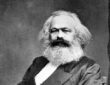
Via InstaPundit, I learn that Karl Marx died on this day in 1883. I concur with Glenn Reynolds’ suggestion that March 14 should therefore be a holiday: Marx performed the difficult feat of being wrong about everything. Most people are right about some things and wrong about others; the law of averages sets in. But if you are an ideologue, like Marx, and if your ideology is stupid, you can
»
March 5, 2024 — Lloyd Billingsley

As Steve notes, Joe Biden can’t even handle his cue cards and calls to dump the Delaware Democrat are surging by the day. That recalls events from the summer of 1972, another crucial election year. The incumbent president was Richard Nixon, hated by the left for his role in exposing Stalinist spy Alger Hiss (see Perjury: The Hiss-Chambers Case). In 1972, the Soviet Union still controlled Eastern Europe under the
»
March 5, 2024 — John Hinderaker

Josef Stalin died on this day in 1953. In his sleep; so, like Lenin, Mao and Castro, and unlike Hitler, Mussolini and Ceausescu, he never paid a price for his crimes. The Victims of Communism remember: Stalin died on this day in 1953. He left behind a legacy of terror, famine, and mass murder. Remember the victims. pic.twitter.com/HUBBYUZMwh — Victims of Communism (@VoCommunism) March 5, 2024 Stalin ranks second only
»
February 23, 2024 — Lloyd Billingsley

Lifelong Democrat Jeane J. Kirkpatrick came to the attention of former Democrat Ronald Reagan though her 1979 Commentary essay “Dictatorships and Double Standards.” As America’s future UN ambassador contended: The failure of the Carter administration’s foreign policy is now clear to everyone except its architects. The pattern is familiar enough: an established autocracy with a record of friendship with the U.S. is attacked by insurgents, some of whose leaders have
»
February 22, 2024 — Scott Johnson

Today we celebrate the anniversary of the birth of George Washington. Of all the great men of the revolutionary era to whom we owe our freedom, Washington’s greatness was the rarest and the most needed. At this remove in time, it is also the hardest to comprehend. Take, for example, Washington’s contribution to the Constitutional Convention of 1787. Washington’s mere presence lent the undertaking and its handiwork the legitimacy that
»
February 21, 2024 — Lloyd Billingsley
Steve marks the contrast between Biden’s confused UN ambassador Linda Thomas-Greenfield and New York Democrat Daniel Patrick Moynihan, who called out anti-Semitism “clearly and forcefully” at the United Nations. Consider also the contrast between Thomas-Greenfield and Ronald Reagan’s UN Ambassador, lifelong Democrat Jeane Kirkpatrick. Kirkpatrick “studied totalitarianism all her life and was aware of its tensile strengths and subtle ruses for maintaining power,” wrote Peter Collier in Political Woman: The Big
»
February 19, 2024 — John Hinderaker

In 1962, there was a Senate race in South Dakota between Republican Joseph Bottum and Democrat George McGovern. The seat was open due to the death of Republican Francis Case. I was just a kid, but I remember that election well. Bottum was the favorite, but in the closing days of the race the Democrats spread a rumor that he was an alcoholic. That ploy may have been crude, but
»
February 18, 2024 — Lloyd Billingsley

Charles “Chuck” Mawhinney, by many accounts the deadliest sniper in U.S. Marine Corps history, has died at 75. In Vietnam, Mawhinney recorded 103 confirmed kills and 216 probable kills. He typically fired from 300-1000 yards with a Remington M40 sniper rifle. One night the sniper took his M14 rifle, equipped with a Starlight scope, and positioned himself where an NVA (North Vietnamese Army) column crossed a river. “As soon as
»
February 17, 2024 — John Hinderaker

I am currently reading The New Roman Empire by Anthony Kaldellis. A history of the Eastern Empire, it runs to 1,000 pages, which isn’t long enough, given the length of time and the density of incident recorded. Among the many subjects covered are the theological and political controversies of the fourth and fifth centuries. The major theological debate in the fourth century was over the relationship between Jesus Christ and
»
