Churchill
July 29, 2018 — Steven Hayward

On my last swing through Washington several weeks back Bill Kristol invited me to sit for one of his “Conversations with Kristol” interviews on the subject of what can be learned about statesmanship from Winston Churchill. The topic is inspired partly because of the success of the Darkest Hour film, and also because of the leftist backlash the film generated, which I have commented upon here a few times now.
»
July 11, 2018 — Scott Johnson
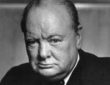
The news is so painfully stupid that I have gone in search of relief. It occurred to me yesterday that the prominent historian Andrew Roberts has a biography of Winston Churchill forthcoming this fall. I thought to look up the publication date — Roberts’s Churchill: Walking with Destiny will be published by Penguin Books on November 9. Looking for the publication date, I also found that Penguin had just posted
»
June 30, 2018 — Steven Hayward
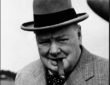
The Dowager Empress of Chappaqua, AKA Hillary Rodham Clinton, AKA the person who did her best to transform Washington DC into Rodham and Gomorrah, is over in Britain at the moment, and yesterday compared herself to . . . Churchill. And the way in which she did it makes me think she is still holding out the possibility of running again in 2020. Some of the report from The Guardian
»
May 6, 2018 — Steven Hayward

I don’t think Churchill ever wrote much about North Korea, even though the Korean War was going on when he became prime minister for the second time in 1951, and Britain was our ally in that conflict. The outbreak of the Korean War mostly spurred on Churchill’s preexisting and controversial view in favor of German rearmament. But my mind has wandered back to some of Churchill enduring lessons as I
»
April 1, 2018 — Steven Hayward
I know I’ve made the point before, but there is fresh evidence in recent weeks of how much the left today hates western civilization and human excellence in general. Once again the left is determined to flunk what I’ve long called “the Churchill test.” Once upon a time leading liberals loved Churchill. Think of Isaiah Berlin’s great 1949 Atlantic Monthly essay, “Churchill in 1940,” or how much Arthur Schlesinger loved
»
February 27, 2018 — Scott Johnson
PragerU enlisted the services of the prominent historian Andrew Roberts to give its short course on “Winston Churchill: The man who saved the free world” (video below). It’s a good title and Roberts knows what he is talking about. He is the author of The Storm of War: A New History of World War II and the forthcoming biography Churchill: Walking with Destiny (also a good title, drawn from the
»
January 21, 2018 — Steven Hayward
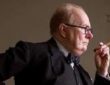
I am pleased to see that on the question of how to think about the Churchill biopic Darkest Hour, the great Andrew Roberts comes down pretty close to where I do–and also where to rank the other major Churchill biopics. Our one major divergence is over Brendan Gleeson’s turn in the HBO production Into the Storm, which I thought suffered more from defective writing and poor direction rather than Gleeson’s
»
December 28, 2017 — Steven Hayward

Pursuant to the discussion here and the podcast Scott and I produced about Darkest Hour, a number of readers have asked for recommendations for good biographies and books about Churchill. Here are ten recommended authors and titles. Right off the top, it should be acknowledged that even the most ambitious reader might not be up to getting through all eight volumes of Martin Gilbert’s official biography (the longest biography ever
»
December 21, 2017 — Steven Hayward
Yesterday Scott and I teamed up to revive our dormant podcast to talk through our divergent opinions about Darkest Hour. I agree with Scott in one major way—that the film takes huge liberties with the facts and interpretation of things, and we spend a good deal of time breaking down some of the historical defects and explaining the deeper story behind some of the truncated and altered scenes. But we
»
December 19, 2017 — Steven Hayward

Darkest Hour goes into general release this Friday, but its early release in selected theaters, presumably for Oscar promotion purposes, has generated considerable controversy, which likely helps its Oscar prospects. Kyle Smith hated the film over at NRO (“An Injustice to Winston Churchill”), as did the Weekly Standard’s Jonathan Last and Sonny Bunch on the “Substandand” podcast (though John Podhoretz liked it in the Standard’s print edition review, which was
»
November 22, 2017 — Steven Hayward

Ironically, once upon a time liberals loved Winston Churchill, while many conservatives didn’t much care for him. Go back to the 1950s and you’ll see encomia to Churchill from Arthur Schlesinger and Isaiah Berlin (among others), and let’s not forget how much John F. Kennedy loved Churchill, and was disappointed he couldn’t lure Churchill to the White House on Churchill’s last visit to the U.S. in 1961. Meanwhile, many conservatives
»
August 4, 2017 — Steven Hayward
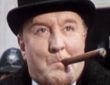
While we await the arrival in November of the next Churchill film, Darkest Hour, with what looks to be an extremely promising performance by Gary Oldman, let us take note of the passing a few days ago of the actor who up to now offered by far the best screen portrayal of Churchill: Robert Hardy. Turns out Hardy had been a student of both J.R.R. Tolkien and C.S. Lewis at
»
July 13, 2017 — Steven Hayward

There was a new movie about Churchill right before D-Day out this spring, starring Brian Cox as Winston, that was so bad I didn’t even bother with a smackdown here. Andrew Roberts wrote that “The only problem with the movie – written by the historian Alex von Tunzelmann – is that it gets absolutely everything wrong. Never in the course of movie-making have so many specious errors been made in
»
December 21, 2016 — Steven Hayward

Tim Alberta’s National Review article, “Conservatism in the Trump Era,” is a terrific piece of reporting, well worth taking in. Among other questions, it looks at the notion of whether the new “economic nationalism” that Trump, or at least his amanuensis Steve Bannon, is working out in real time will confound or corrupt conservatism—or make for an enduring Republican majority that scrambles the voter alignments of the last two generations.
»
October 22, 2016 — Steven Hayward

Scott was very kind this morning to draw attention to my Weekly Standard article “Crisis of the Conservative House Divided.” I would have done so myself, but I was on the road all day yesterday on a completely frivolous and speculative venture: I drove up to Modesto, the location where American Graffiti was filmed set, to meet up with my two best pals from high school (we call ourselves “The
»
September 15, 2016 — Steven Hayward
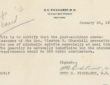
While we ponder the medical mystery of Hillary Clinton and scour Donald Trump’s latest test results, may we pause to take in the greatest doctor’s note of all time: Which also reminds me of Churchill’s response to King Feisal of Saudi Arabia, who had told Churchill that Islam forbid drinking alcohol as they were sitting down to dinner. To which Churchill sensibly replied: “My religion commands the consumption of alcohol
»
April 23, 2016 — Scott Johnson

President Obama’s ignorance of Winston Churchill is monumental. It is such that at his first press conference in 2009 Obama could quote Churchill in support of Obama’s high-minded approach to war: “We don’t torture.” If you know anything, and I mean anything, about Churchill, however, you know Churchill never said any such thing. I made this point at the time in “Obama veers into the Daily Ditch.” Yesterday at his
»
