Crony capitalism
February 3, 2014 — Steven Hayward

Power Line pal Dan Mitchell points us to the ideal toys for left-wing children to put on your Christmas shopping list for later this year. (Hey—there’s only 325 shopping days until Christmas, so why wait until Memorial Day to start shopping?) Whoever these Kronies.com guys are, they’re geniuses. (I especially like the shape-shifting Ethanol man. In an article I’m working on right now, I’m saying that “to call ethanol a
»
December 15, 2013 — John Hinderaker

We have written many times about the corruption of the global warming movement. Billions and billions of dollars are being poured into the pockets of global warming alarmists, because they perform such a valuable service: they help to persuade voters that governments should be given greater control over the world’s economies. What’s a few billion dollars when trillions are at stake? We have written mostly about the corruption of Greens
»
April 3, 2013 — John Hinderaker

I wrote here about the Democrats’ relentless (and highly successful) fundraising on the theme of Democrats’ grass roots contributions vs. the Republicans’ “millionaires and billionaires.” This is nonsense, of course, but any story told often enough starts to seem plausible. Politico reminds us that the Democrats’ millionaires and billionaires are both financing the party and calling the tune, especially when it comes to energy issues: COWABUNGA, DUDE: President Barack Obama
»
February 26, 2013 — Paul Mirengoff
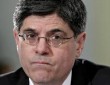
The Wall Street Journal focuses attention on two questions regarding Jack Lew and the paychecks he received from private employers before returning to government. First, why did New York University pay severance to Lew in 2006 when he left there voluntarily to work at Citigroup? In my experience, employers don’t pay folks to quit their job. Severance pay is what you get when you are, in effect, sacked. Second, why
»
February 21, 2013 — John Hinderaker

As President Obama deliberates whether to continue blocking the Keystone Pipeline–or pretends to, anyway–environmentalists have gotten more passionate. Last week, 48 climate activists were arrested at the White House as they urged Obama to stop the pipeline. Notables who were arrested included the head of the Sierra Club, Robert Kennedy, Jr., Bill McKibben and Julian Bond. The activists’ sign said that blocking Keystone constitutes “leading on climate.” But does it?
»
January 3, 2013 — Paul Mirengoff

Here, via the Washington Post, is a partial list of those whose pork was preserved by the “fiscal cliff” legislation that passed Congress: Puerto Rican rum distillers Hollywood studios (what a surprise) Tribal lands coal Electric scooter makers The wind-energy industry Wouldn’t it have been nice if the House had passed an amended version of the Senate bill that eliminated the pork? Harry Reid’s Senate would then have had to
»
December 13, 2012 — Scott Johnson

In a column with an improvisational feel, George Will captures some of the abundant absurdity to which we have grown accustomed. Considering one small slice of Senator Richard Durbin’s fatuity, Will riffs: It is enough to make you want to hop in your Fisker and drive off a fiscal cliff. You should know Fisker because you have helped to finance the Anaheim, Calif., company that makes — well, has made
»
December 6, 2012 — John Hinderaker

Crony Chronicles is a good site that addresses one of the key issues of our time; not just that, but a potentially winning issue for conservatives. It is worth bookmarking and returning to. The latest from Crony Chronicles is Miracle on Wall Street. First, the video, by our friend Justin Folk: Crony Chronicles notes that in 2012, according to the Cato Institute, the federal government paid out $98 billion to
»
November 4, 2012 — Paul Mirengoff

Peter Schweizer, in the Washington Times, helps expose the auto industry bailout for what it was — “a classic tale of cronyism, in which the well-connected sped away with big bucks.” In this instance, the “well-connected” can be found mainly in the world of Big Finance: In his recent book “Bailout,” the former special inspector general for the Troubled Asset Relief Program, Neil Barofsky, points out that when it came
»
October 30, 2012 — John Hinderaker
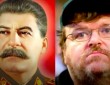
Our friend Justin Folk collaborated with Andrew Klavan on this excellent video, which explains the 2008 financial collapse in entertaining, understandable and accurate fashion. It is called, “Picking Losers, Why Cronyism Isn’t Capitalism.”
»
September 10, 2012 — John Hinderaker
In today’s Wall Street Journal, Charles Koch explains concisely why corporate cronyism, a hallmark of the Obama administration, is bad–not just when it’s the other side’s cronies, but bad, period: “We didn’t build this business—somebody else did.” So reads a sign outside a small roadside craft store in Utah. The message is clearly tongue-in-cheek. But if it hung next to the corporate offices of some of our nation’s big financial
»
August 23, 2012 — John Hinderaker

There once was a time when American children dreamed big. They wanted to build things, create things, achieve things, cure things. Do such ambitions make sense anymore? In today’s America, aren’t our children learning how much better it is to be a tax spender than a taxpayer? Cynical people have always said that connections are more important than talent and hard work, but until now, it wasn’t true. Now, in
»
August 22, 2012 — Paul Mirengoff
If there’s one big issue that arises continuously and vexatiously in American history that issue, I submit, is not race but banks. To be sure, the Republican Party owes its formation to slavery, which the Party’s first president abolished. But the formation of two bitterly opposed parties — Democrat and Whig (predecessor to Republican) — had nothing really to do with race, and plenty to do with banks. In any
»
August 16, 2012 — Steven Hayward

It’s been a while since we last updated the “China: Don’t Look Now, But. . .” series (you can find the previous three installments here, here, and here), but a terrific op-ed in today’s Wall Street Journal by Joseph Sternberg suggests that China has finally succumbed to the “greater fool” theory, as evidenced by its recent decision to buy A123 Systems, the ailing, Obama-backed (which means taxpayer-backed) car battery company
»
August 15, 2012 — Paul Mirengoff
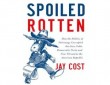
Many of our readers are familiar with Jay Cost based on his work at Real Clear Politics and then at the Weekly Standard. As good as that work is, I had no idea that Cost had a book in him like Spoiled Rotten: How the Politics of Patronage Corrupted the Once Noble Democratic Party and Now Threatens the American Republic. This book, in part, is an excellent survey of the
»
August 13, 2012 — Paul Mirengoff

The Washington Free Beacon reports that Senate Majority Leader Harry Reid has been working to secure sweetheart deals for Chinese green energy firms. Specifically, Reid reportedly has been pulling strings behind the scenes on behalf of ENN Mojave Energy, a Nevada subsidiary of the Chinese-owned ENN Group. After more than two years of secret negotiations beginning in 2009, lawmakers in Clark County, Nevada agreed to sell 9,000 acres of public
»
July 31, 2012 — Steven Hayward

Once upon a time conservatives agitated to privatize the U.S. Postal Service. But hardly anyone on the right cares about the Post Office any more for the simple reason that technology has enabled us to go right around it: we use faxes and emails to transmit documents, pay our bills online, and send packages by UPS or FedEx. (By the way, when the fax machine was first being brought to
»
