Medicare
November 12, 2023 — Scott Johnson

I seriously doubt that President Biden could pass a Medicare cognitive ability test. It’s not exactly challenging, but Biden is too far gone. Everyone sees it. Everyone knows it. We are in any event way beyond the emperor-wears-no-clothes phase of inhibition controlling the unruly multitude. The mainstream press continues to serve as a sort of bodyguard for Biden, but the New York Post blurts it out on the cover today:
»
October 12, 2021 — Paul Mirengoff
Back in 2009-10, when the Democrats controlled 59-60 Senate seats, they were pleased as punch to pass a $1 trillion stimulus package and the “camel” known as Obamacare. Sure, some Dems wished for even more stimulus money and the “horse” of single-payer health insurance. But there was no serious resistance to settling for less and few public complaints about not getting more. Twelve years later, with the Dems controllingly only
»
October 4, 2017 — Scott Johnson

Democratic New Jersey Senator Robert Menendez stands revealed as a man of deeply flawed character in his ongoing trial on corruption charges. The charges derive from the use of his high office to serve his good friend and codefendant, Dr. Salomon Melgen. The government has already convicted Melgen on 67 counts of health care fraud involving millions of Medicare dollars. (Here is a good local news account of Melgen’s health
»
November 5, 2015 — Paul Mirengoff
I have heard several Republican presidential candidates, including Ted Cruz, publicly wish that the GOP would fight as hard for conservative principles as President Obama fights for radical leftist ones. It’s a good thought, but I wonder whether those expressing it realize the full implications. One crucial way that Obama fought for his radical leftist principles was to conceal them when running for president. For example, he didn’t support gay
»
August 1, 2015 — Paul Mirengoff
Campaigning in New Hampshire last month, Jeb Bush said he wants to “phase out” traditional Medicare to build a more efficient, market-based system focused on patients. Democrats pounced immediately. DNC press secretary Holly Shulman claimed that under a Bush presidency seniors would lack the benefits they rely on. Tevi Troy, writing in the Wall Street Journal, reminds us that the Democrats have been engaging in this sort of Mediscare for
»
October 23, 2013 — John Hinderaker

The Can Kicks Back is a web site, and a campaign, run by a group of millenials. The group has embarked on a national tour in support of generational equity, which is described here. This video provides a quick introduction: The group’s theme is generational equity: young people are being shafted by the Obama administration and everyone else in Washington who refuses to do anything about the federal debt. This
»
April 5, 2013 — John Hinderaker

A friend who has been on this particular case for a long time writes: Yet another NOW they tell us moment: President Obama had Senate Republicans nodding in agreement during a recent ice-breaking dinner as he described a basic problem for the nation’s fiscal future: For each dollar that Americans pay for Medicare, they ultimately draw about $3 in benefits. What’s more, he added, most people do not understand that.
»
March 9, 2013 — Paul Mirengoff
At Power Line, we maintain, as most conservatives do, that President Obama isn’t serious about entitlement reform. But those on the other side of the great political divide are equally insistent that Obama is open to, and in fact has proposed, serious reform of Medicare, Medicaid, and Social Security. Who is right? It depends on the meaning of “reform.” For, as Yuval Levin shows, although Obama has proposed some cuts,
»
March 6, 2013 — John Hinderaker

Earlier this evening, Paul suggested that Republicans should be open to a “grand bargain” as long as it includes significant entitlement reform. In principle, I don’t disagree. But is there any realistic possibility that the Democrats will agree to entitlement reform? One might think so, since everyone acknowledges that the current regime is unsustainable, and if entitlements are not reformed they either will be repealed, or our economy and our
»
January 22, 2013 — John Hinderaker

Liberals are feeling triumphant these days, but in the backs of their minds there must be a sense of foreboding. They won this year by demonizing Republicans and by bribing various demographic groups with government largesse. But the Left’s tactical victory can’t conceal the fact that its ideology is bankrupt. The left’s real enemy isn’t Republicans, it is arithmetic. Welfare states are collapsing all around the world. Ours is on
»
December 12, 2012 — Paul Mirengoff

President Obama’s goal in the fiscal cliff negotiations seems clear. He wants to force the Republicans to swallow increases in the tax rates of high-earners and thereby bring in at least one trillion dollars in revenue. Alternatively, if the Republicans won’t swallow rate increases for the “wealthy,” he wants to see everyone’s taxes go up and be able to blame Republicans for it. The Republican goal also seems clear. They
»
September 23, 2012 — Scott Johnson
In its early days the Obama administration avidly promoted financial incentives for the adoption of electronic health records by medical providers. According to Obama, the adoption of electronic health records would save $80 billion in health care costs. The use of electronic health records has been touted by the government (state and federal) for years. Financial incentives for the adoption of electronic health records by Medicare and Medicaid providers, however,
»
August 19, 2012 — Paul Mirengoff
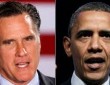
President Obama says that this election presents Americans with a very clear choice. He is right. Mitt Romney and Paul Ryan believe that America can prosper economically the way it traditionally has – through free markets and competition. This is what they mean when they talk about unleashing the private sector. Obama, though, calls this approach the same “snake oil trickle-down economics” that “caused the mess in the first place.”
»
August 17, 2012 — John Hinderaker

Mitt Romney’s selection of Paul Ryan as his running mate should help to focus attention on the federal budget, a critical issue that by rights is an easy winner for Republicans. (There is a reason why the Democrats have refused to adopt any budget at all for more than three years.) By now, news accounts have made it clear that Ryan has some sort of plan to deal with the
»
August 13, 2012 — John Hinderaker
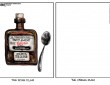
Democrats have been quick to pounce on Paul Ryan’s budget, which was enacted by the House of Representatives and incorporates significant entitlement reform. The Democrats, of course, have no budget at all–astonishingly, they refuse to adopt one. They have no plan for entitlements other than to allow them to go bankrupt and, presumably, be repealed by Congress. The Democrats apparently believe that most voters prefer no plan to salvage unsustainable
»
April 24, 2012 — Paul Mirengoff

The Medicare Trustees released their annual report yesterday. Today, at a conference hosted by the American Enterprise Institute, Medicare’s chief actuary, Richard Foster, summarized the Trustees’ report. The picture isn’t pretty. The report projects that the Medical Hospital Insurance trust fund will run out of assets in 2024. But, as Foster explained, even this dire projection is almost certainly too optimistic. That’s because the projections are based on changes to
»
April 6, 2012 — John Hinderaker

I don’t, actually. I think Medicare was Congress’s great blunder of the 20th century. I think the program will continue bleeding money until it bankrupts the United States of America and destroys our economy, in roughly 15 years. And it will be popular right up to the end, as long as people perceive that they are getting something for nothing, or–same thing–a lot for very little. So in my view,
»
