Barack Obama
April 25, 2024 — Lloyd Billingsley

Last August in “The Obama Factor,” Tablet’s David Samuels asked David Garrow if he could imagine Obama joining the Supreme Court. “He’d be terrible because he’s too lazy,” Garrow said. “This in the book. It goes back to him being Hawaiian. At one point, he says, ‘I’m fundamentally lazy and it’s because I’m from Hawaii.’ That’s close to the actual quote.” Garrow’s massive Rising Star: The Making of Barack Obama
»
April 23, 2024 — Lloyd Billingsley
On August 2, 2023, Tablet editor David Samuels interviewed David Garrow, author of Rising Star: The Making of Barack Obama, a massive work that, as Scott explains, “puts every other biographer of Obama to shame.” This post reviewed Samuels’ statements in light of 10/7 and Iran’s more recent attack on Israel. In that context, Garrow’s comments are also of interest, particularly his outing of Dreams from My Father as a work of fiction.
»
April 17, 2024 — Lloyd Billingsley
On August 2, 2023, Tablet editor David Samuels interviewed David Garrow, author of Rising Star: The Making of Barack Obama. On October 7, 2023, Hamas launched a massive attack on Israel and committed the worst massacre of Jews since the Holocaust. In light of those events, and the recent attack on Israel directly from Iran, consider some of Samuels’ own statements during “The Obama Factor” interview: I find Barack Obama
»
March 29, 2024 — Scott Johnson

The Washington Free Beacon devotes The Stiles Section to the work of senior writer Andrew Stiles. Stiles previewed last night’s Million Dollar Bash in New York City in “Liberal Celebs Host ‘Fundraiser From Hell’ for Joe Biden.” This morning in his companion weekly newsletter (readers can subscribe to it here) Stiles ran it down this way: Worst party we weren’t invited to: Rich liberals shelled out as much as $500,000
»
January 24, 2024 — Lloyd Billingsley

“I am terrified about what could possibly happen,” said Michelle Obama on a January 8 podcast, “because our leaders matter. Who we select, who speaks for us, who holds that bully pulpit — it affects us in ways that sometimes I think people take for granted.” In short order, commenters were speculating that, with Joe Biden such a bust, the former First Lady could “sneak her way into the 2024
»
January 15, 2024 — Lloyd Billingsley
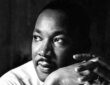
On January 15, 2016, when he proclaimed the national holiday for Martin Luther King, President Obama said: With profound faith in our Nation’s promise, the Reverend Dr. Martin Luther King, Jr., led a non-violent movement that urged our country’s leaders to expand the reach of freedom and provide equal opportunity for all. Together, with countless unsung heroes equally committed to the idea that America is a constant work in progress,
»
January 9, 2024 — Lloyd Billingsley
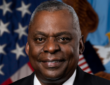
As Scott noted previously, Secretary of Defense Lloyd Austin was hospitalized for three days before Joe Biden knew anything about it. Austin claimed he “could have done a better job ensuring that the public was informed.” Such an understatement raises more than a few questions. We now know he was being treated for prostate cancer, but neither President Biden nor his staff knew this until today—weeks after Secretary Austin went
»
December 25, 2023 — Lloyd Billingsley

Harvard president Claudine Gay is being pressured to step down over charges of plagiarism as former president Obama lobbies the administration to stick with her. That makes sense because Obama is a Harvard law alum, like Gay soft on campus anti-Semitism, and no stranger to plagiarism his own self. In Dreams from My Father, released in 1995, the author visits Kenya and the account bears remarkable similarities to I Dreamed of Africa, published in
»
December 24, 2023 — John Hinderaker
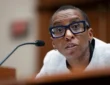
Harvard University has circled the wagons around President Claudine Gay, reportedly encouraged to do so by no less than Barack Obama. This despite the fact that Gay not only embarrassed the university with her inept and tone-deaf Congressional testimony, but has also been exposed as a serial plagiarist. And not only does the university seem unworried by Gay’s plagiarism, it has emerged that Harvard exonerated Gay before conducting a secret
»
December 3, 2023 — Lloyd Billingsley

On December 2, 2015, workers at the Inland Regional Center in San Bernardino, California, gathered for a holiday party. For 14 of the workers, the event would be their last. American-born Syed Farook and his wife Tashfeen Malik, a green-card holder born in Pakistan, shot down Robert Adams, Isaac Amianos, Bennetta Betbadal, Harry Bowman, Sierra Clayborn, Juan Espinoza, Aurora Godoy, Shannon Johnson, Larry Daniel Kaufman, Damien Meins, Tin Nguyen, Nicholas
»
November 13, 2023 — Scott Johnson
Peggy Noonan’s weekly Wall Street Journal column dated November 2 dispensed advice for Israel in its current fight for survival. Noonan advised Israel not to fight. I criticized the column for its stupidity yesterday. I can’t say it’s the most stupid column of the past 25 years, but it must be tied with others for that distinction. While patently stupid, the column reeks of Noonan’s precious self-regard. She relishes every
»
November 10, 2023 — Lloyd Billingsley

A veritable Krakatoa of anti-Semitism is erupting across America, with little if any reference to the nation’s leading anti-Semite, Nation of Islam leader Louis Farrakhan. As recently noted, 1984 presidential candidate Jesse Jackson apologized for calling Jews “hymies,” but refused to denounce Farrakhan. The Nation of Islam boss also has a history with the composite character David Garrow profiled in Rising Star: The Making of Barack Obama. In 2005, a
»
November 7, 2023 — Lloyd Billingsley

“David, it’s Barack. I’m thinking about what I want to do next, and was wondering if we could talk.” That would be David Axelrod, the Democrat strategist who wants Joe Biden to step aside, in his 2015 book Believer: My Forty Years in Politics. The former journalist, adept at telling stories, was delighted to get the call. “Barack personified the kind of politics and politician I believed in,” the believer
»
November 7, 2023 — Scott Johnson
Liel Leibovitz comments on Barack Obama’s “we’re all complicit” shtick regarding the Hamas massacre of Israeli Jews (see Steve Hayward’s post here): Study the 44th president’s record, to say nothing of his extensive writing and speeches, and a clear ideology emerges, the sort of gauzy anti-Imperialist fantasy so trendy in graduate seminar rooms that eschews American power and dreams that the wretched of the earth will rise up to the
»
November 6, 2023 — Lloyd Billingsley
Based on recent polls, Democrat strategist David Axelrod believes Joe Biden would be “wise” to drop out of the 2024 presidential race. Axelrod comes billed as a “former Obama advisor,” but that sells him short. The New York Times hailed him as “Obama’s narrator,” and he signed off on his client’s every word. In 2015 Axelrod authored Believer: My Forty Years in Politics. “Authenticity is an indispensable requirement for any
»
November 5, 2023 — Steven Hayward

There’s a great book yet to be written about the full scope of destruction purposely wrought by Barack Obama’s presidency. Many of the deepest divisions and identity-based hatreds of the moment accelerated markedly during his two terms, and he usually inflamed them deliberately, but always subtly, so as not to leave clear fingerprints. He’s at it again with his latest comments about the Israel-Hamas war. There’s quite a contrast between
»
November 2, 2023 — Lloyd Billingsley

Continuing with previous installments here about the “Munichian candidate” Ammar Yasser Najjar and his attempts to win elected office in California, it is worth observing how his efforts to disguise his identity and background are hardly unique among celebrated California Democrats. The Munichian candidate’s story has yet to face a squad of forensic document examiners, polygraphers and DNA testers, and in that regard the rockstar Democrat has company. Consider the
»
