Economy
November 14, 2022 — John Hinderaker

Americans’ standard of living has been hammered by inflation the likes of which we haven’t seen in decades. There has been lots of happy talk from the administration, but no one thinks prices are going down any time soon. What, then, is going to happen? My colleague John Phelan offers an answer: prices should be rather stable for a while, unless the federal government embarks on a fresh money-printing spree:
»
November 6, 2022 — John Hinderaker

Hard on the heels of Elon Musk’s laying off half the staff of Twitter comes news of layoffs at Meta (Facebook): The layoffs are expected to affect many thousands of employees and an announcement is planned to come as soon as Wednesday, according to the people. Meta reported more than 87,000 employees at the end of September. Company officials already told employees to cancel nonessential travel beginning this week, the
»
October 25, 2022 — John Hinderaker
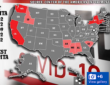
The U.K.’s Daily Mail, one of the world’s top news sites, published a major story yesterday on the economic damage inflicted by covid shutdowns in the United States. The article’s message was that states that had more severe shutdowns suffered worse economic harm. The headline is long: “The price of pandemic restrictions REVEALED: Covid-19 measures cost Massachusetts residents $2,862 each in early 2021 — nearly THREE times as much as
»
October 23, 2022 — Scott Johnson
With his economic advisers hanging like drapery in the background this past Friday morning, President Biden gave Remarks on Historic Deficit Reduction. To have no shame can be a real advantage in politics. It has served Biden well so far. However, this performance is a doozy. Brian Riedl calls it “a remarkable feat of gaslighting” in a New York Post column full of useful background. I’ll go with “remarkable,” but
»
October 22, 2022 — John Hinderaker

It was obvious early in the covid epidemic that the benefits of lockdowns were speculative and hypothetical, while the costs were large and undeniable. Now that the dust has settled, those costs can be quantified. My staff has produced two new papers on the costs of the covid shutdowns in Minnesota. While their analyses are state-specific, it is reasonable to assume that their findings would be reflected in other states,
»
October 17, 2022 — John Hinderaker

BlackRock Inc. is the world’s largest investment company. It has also been the leader in ESG (environmental, social, governance) investing–i.e., prioritizing a left-wing agenda over shareholder returns. It seems, finally, that BlackRock’s political agenda is dragging the company down: Brennan Hawken, an analyst at [UBS], downgraded the stock of BlackRock (NYSE: BLK) to Neutral from Buy and slashed the stock price target to $585 from $700 over growing pushback to
»
October 13, 2022 — John Hinderaker

Cost of living data are out for September, and they are grim. The Wall Street Journal reports: U.S. consumer inflation excluding energy and food accelerated to a new four-decade high in September, a sign that strong and broad price pressures are persisting. The Labor Department on Thursday said that its so-called core consumer-price index—which excludes volatile energy and food prices—rose 6.6% in September from a year earlier, the biggest increase
»
October 11, 2022 — John Hinderaker

From early in the covid epidemic, it seemed obvious that the shutdowns ordered by nearly all governors and many municipalities did little good and caused tremendous damage. Experience has borne out that conclusion, but almost everywhere, governments have moved on without any accounting for the mistakes that were made. American Experiment has just released two papers that address the consequences of covid shutdowns. While their specific focus is on Minnesota,
»
October 4, 2022 — Steven Hayward

Back in 1980, as Britain’s economy fell into steep recession along with much of the rest of the world, recently installed prime minister Margaret Thatcher came under fire for her policies of spending restraint and tax cuts. Much of her own party wanted her to backtrack, never mind the opposition Labour Party and the media. It was in the midst of this that the “Iron Lady” lived up to her
»
September 28, 2022 — John Hinderaker

Times are tough, although the elites that run our country probably haven’t noticed. But for most of us, the rising costs of gasoline, electricity, manufactured goods and groceries, along with a decline in the value of our savings and the prospect of paying for trillions in new federal deficits, are alarming. How worried are Americans? This worried: Rasmussen finds that 57% of Americans are expecting a depression: The latest Rasmussen
»
September 24, 2022 — John Hinderaker

British Prime Minister Liz Truss is going big. Her Chancellor, Kwasi Kwarteng, has unveiled an aggressive program of permanent tax cuts. The Wall Street Journal likes the plan: Mr. Kwarteng axed the 2.5-percentage-point increase in the payroll tax imposed by former Prime Minister Boris Johnson, and canceled a planned increase in the corporate income tax rate to 26% from 19%. … Kwarteng also surprised by eliminating the 45% tax rate
»
September 13, 2022 — John Hinderaker

The Dow was down 1,276 points today, or 4%. Why? The August inflation number came in worse than expected: The new data showed the consumer-price index rose 8.3% in August from the same month a year ago. That was down from 8.5% in July and 9.1% in June—the highest inflation rate in four decades. But on a month-to-month basis, the figures showed inflation accelerating in August, dashing investors’ hopes that
»
September 11, 2022 — Scott Johnson

On Friday the White House released “the Biden-Harris economic blueprint” a/k/a “the President’s Economic Blueprint” (press release here, 58-page document here). It’s a “blueprint” with “five pillars” that have done so much for us already and promise to do more and worse in the future. Performing the work that our native media fact-check workers refuse to do, James Bovard assesses the veracity of claims made in the “blueprint.” He introduces
»
August 23, 2022 — Steven Hayward

As you may have heard, Robert Reich, who increasingly looks like a parody of an old man yelling at clouds, is very concerned about equality. Very very concerned. Almost obsessively concerned. Actually, strike “almost” from the previous sentence. His egalitarianism extends to the WNBA. Reich finds it scandalous that WNBA players aren’t paid the same as NBA players. Never mind getting schooled by any libertarian walking down the street, as
»
August 19, 2022 — John Hinderaker

This Research Brief from the Institute of Governmental Studies at Berkeley measures the extent to which cities and, specifically, downtowns have recovered from the covid shutdowns. The piece is noteworthy because of its methodology: it uses cell phone data to track the extent to which people are returning to various cities and the downtown areas within those cities, so it is based on objective reality. I encourage you to follow
»
August 11, 2022 — Scott Johnson

In their own way President Biden’s White House minders must be just about as far gone as he is. With the announcement that Consumer Price Index had declined year-over-year from 9.1 percent to 8.5 percent, they thought it made sense to push the line that the numbers reflect “zero inflation last month” (i.e., on a month to month basis). The Bureau of Labor Statistics data are compiled here (home page)
»
August 3, 2022 — John Hinderaker

The Biden administration has tried to redefine “recession” to avoid responsibility for two consecutive quarters of GDP decline. Has that rather pitiful effort worked? No, according to Rasmussen Reports: Despite denials from the White House, most voters think the American economy is in a recession – and agree that Democrats are to blame for it. A new national telephone and online survey by Rasmussen Reports finds that 62% of Likely
»
